The 5 Symbols of the Camino de Santiago, Part Three: The Yellow Arrow

It may look like the same route as the hundreds of thousands of pilgrims before you yet it is different for your walking it. A pilgrim’s unique footprints make for a unique pilgrimage. 

The Yellow Arrow is a sign of reassurance that one is following one of the routes on the pilgrim’s way and is an iconic symbol of direction in one’s life as well as ancestral direction and rites of passage—pointing out A way which is different to THE way. 

When finding and following these markers it’s a reminder to honour those who have come before. There is a ritual to walking a path that many have taken before, honouring them for carving the way and then honouring oneself for creating one’s own journey from the way. There are many paths leading individuals back home to themselves.

A well-trodden path is still the path untaken until one actually takes it … and then one gets to make it one’s own. It is important to get lost in order to find my way and there is a particular practice of non-judgemental observation that comes with the acceptance of this. I feel it’s important to find myself in a place so unfamiliar that I am challenged to work out how to come back to myself or to accept the new place in which I find myself.

Every part of the entire universe is already right here in this one moment … this one step. There is no manifestation magic in life; it’s all about showing up and placing each foot down with attention and intention. In alchemy it is the third stage in the process, Citrinitas, which is the stage of education before Rubedo, the stage of transformation.

The present moment is your refuge, and this is your home … each footfall brings you back to your self and each self that footfall brings you to is changed because of the footfall. Each contour is as unique as the contours on each individual’s thumbprint; each arrow perceived as just a subtly different shade of yellow; each vista viewed with new eyes; each drop of dew a different prism of light. 

Stepping into each moment builds awareness of what’s in the way, where the path is leading, how open you are to your intuitive GPS, when to follow outside signs or inner cues, when to change direction etc. Trust in self appears in the showing up without knowing where the path goes but recognising that no matter where it goes it is going somewhere and it’s ok to adapt along the way. It’s impossible to be ready for every eventuality before a journey but it’s possible to be prepared to be resilient enough to figure it out on the way. To be able to flex into the curves and detours of any journey is a skill we can develop through recognising that there are over seven billion unique humans and, therefore, over seven billion unique paths.

Questions to ask yourself:

  • Where did I lose my way?
  • How was I able to find my way again, find a new way, or ask someone to guide me?
  • In the moments of getting lost how did you recalibrate to a new way by asking for guidance?

You can follow, support and share my Walking for Mental Health fundraising campaign on BackaBuddy. All my socials can be found on LinkTree.

The 5 Symbols of the Camino de Santiago, Part Two: The Walking Stick

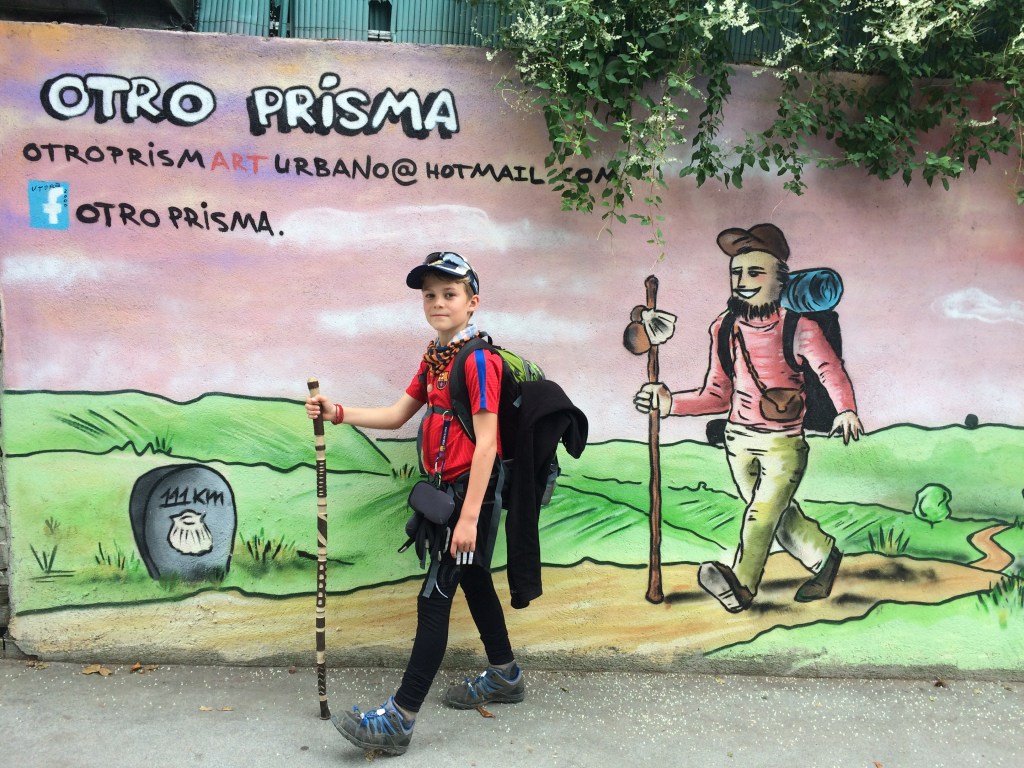
The Walking Stick is a symbol of those people in one’s life who assist in upliftment, encouragement and forward momentum. Having an emotional, physical and spiritual staff to lean on can help traverse tricky terrain.

I don’t walk with poles or a walking stick—in fact the few times I have used someone’s for a difficult crossing or steep downhill, I have fallen. This indicates to me that I need to become more familiar with asking for support. My innate tendency is to always be self supporting and to hold others up. This can be to my detriment if I can’t equally find the people and resources to support me in supporting others.

A Walking Stick can be seen in the negative light of a crutch and using one can be seen to highlight one’s disabilities. It is, therefore, imperative to give this an archetypal symbology that encourages its use. The sense of outreach in difficult times is so key to reducing suffering and restoring well-being. 

This current campaign to walk 1,000km to raise awareness for mental health and suicide prevention made me extremely vulnerable in the asking for support and extremely disappointed. My lessons around support are to lean in only when the support is actually there and being mindful of expectations of it, without using the lack of people believing in me to snap back into being 100% self supporting again.

When you carve a walking stick that ultimately provides support for your pilgrimage, it is like an analogy that can translate into the care and love offered to and infused into another human being that ultimately become the food that fuels that individual to be the support you one day may reach out for.

The pilgrim’s Walking Stick is a symbol that young, able-bodied people also make use of this often necessary tool for of support and that there is no stigma attached to utilising it, whether walking 5 or 45 legs of the Pilgrim’s Way. Using a Walking Stick can be a practice of mindfulness and gratitude—a way to honour the self and the body in recognition of its strength and also acceptance of its fallibility.

It holds the intention and reminder that there is always support at hand and it will challenge a different response when either needing to ask for or accept the offer of help from others. I can lean on something/someone temporarily and it’s ok to then lay it down, until needed again, without a) feeling obligated to be enslaved, and b) depending on it always being there.

Questions to ask yourself:

  • What held me back—cognitively, emotionally, somatically—in asking and/or receiving a hand of support today?
  • Who are the people in my community, tribe who are my walking sticks in life and how do I honour these people more by being receptive to their care?

You can follow, support and share my Walking for Mental Health fundraising campaign on BackaBuddy. All my socials can be found on LinkTree.

When asked, ‘Why …?’

When asked why I chose the Camino de Santiago for this mission and to raise awareness for Mental Health in Suicide Prevention month, the answer was clear:

I have walked so many varied paths all my life, always with this libido driving me towards something there … yet not yet visible. There has been this calling, sometimes subtle and sometimes so intense it has brought me to my knees in prostration and frustration. And yet I have walked and walked and walked through injury, bad climate, distress and, most importantly, a deep knowing that there was something I was walking towards.
Raising awareness for mental health; de-stigmatising conversations around suicide, trauma, grief and loss, and educating people with tools and techniques to recalibrate around adverse life events and debilitating emotional distress are what I was unwittingly walking towards on all my paths.
My paths have been in psychology, investment banking, social development, coaching, meditation, mountain guiding, Vedic scriptures, travel and trekking, writing, creating, consulting, healing and helping.
In short, Walking for Mental Health is my very own Camino de Santiago

With two weeks until departure for Spain to walk 1,000km whilst offering my skills, gifts, wisdom and work freely to fellow pilgrims on their own unique paths to their mental, emotional, physical and spiritual goals, I am reaching out once more for support for my campaign, which is almost 50% funded and which still needs over ZAR 20,000 to make it possible.

If you are unable to make a donation, please consider sharing the campaign with those who resonate with my vision and mission and please note that there are donor incentives for those who would like to experience my work.

To contribute to Walking for Mental Health you can click on my BackaBuddy link:
https://backabuddy.co.za/campaign/walking-for-mental-health
or find all my socials, including how to follow my journey on YouTube, by clicking on my LinkTree:
https://linktr.ee/Walking_for_Mental_Health

Being a donor and supporting me to walk my talk means you become part of the journey of support for whomever I coach along the way. You become part of the solution.