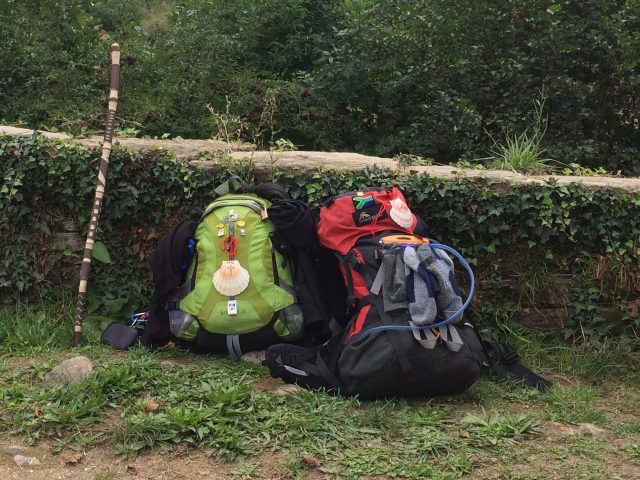
Symbolically the shell is from the ocean and is linked to Venus (self love). It is the so-called medal at the end of the journey once the shore is met and one is able to baptise oneself in the salt water and become new once more—like a baby, and with unconditional love for self.
The way it ties together the network of support is that its image is used as way markers along the route, marking the way through landlocked villages and cities in the hopes of—in days or weeks or months time—the pilgrim will reach the end … which is also the beginning.
It is not only an inner and outer totem of the achievement of the completion of this particular pilgrimage, it also denotes an opening of the heart and a vessel from which to gather water to drink or anoint oneself. It is also used to ask for donations of food and money.
Sometimes building self kindness can be through random acts of kindness to others. Showing someone else the way can be a guide for self awareness and more adept self trust, self love and self guidance. The notion of offering a helping hand draws attention to the focus on the work I do with my hands and how that reflects on how to give—but not too much of myself so as to not become depleted—and, with the same open hand, to receive what I need from others.
The lines on the shell are known to represent the different routes taken by the pilgrims so, having this as a source, we can trace our different narratives with the outlook that there are many pathways to the same destination and the goal is in the experience itself. Being open and aware to the needs of others is the beginning of a journey home to self.
Questions to ask yourself:
How did I stay open and flexible to changes in the direction my day took?
What are the inner signals of courage I can pay more attention to?
How did I engage with and harmonise giving and receiving?
The end of one journey is always only the beginning of something else so there can never be any expectation of finality. Life is only what you can hold in the Scallop Shell.
On this pilgrimage, because I am walking to raise awareness for mental health and will be intentionally working with people who approach me for coaching, meditation, therapies etc, I will hang a donation box from my backpack with a QR code that pilgrims can scan to access my socials, the work I do and the cause I am walking for. This is aligned to the scallop shell which can also be used as a begging bowl and I am doing this as a way to break down my ego as I open myself to receiving donations from strangers like a nun.
You can follow, support and share my Walking for Mental Health fundraising campaign on BackaBuddy. All my socials can be found on LinkTree.
Joseph Campbell said, “Follow your bliss”. Pilgrims follow their bliss/ters.
On no past Camino de Santiago or long-distance local hike have I had to deal with blisters. The only trek I suffered from blisters was in 2001 on the Annapurna Circuit (Nepal) when I walked in leather boots I took out of their box to pack in my backpack … I didn’t walk in them once before boarding the plane to walk for 21 days across and over the Himalaya at 5,400m altitude.
Symbolically, my life in 2001 was plagued with abrasions that caused more pain than pearls and by 2016, my first Camino of 250km with my then 11-year-old son, I had recognised and was acting on my need to nurture my wounds.
Some people diminish their wounds; some deny them; some go into a trauma response and simply obliterate them from memory; some defend their wounds and use their pain as a badge of honour, and some just never quite manage to shine because that would mean giving up on the psychic injuries they have been subjected to.
Adapting to different footwear—I now wear Altra trail running shoes for Camino and will be wearing T-Rockets running sandals on some days too—and conditioning my feet long before the journey, as well as every day before and after walking, is a good analogy for building capability and competency to face challenges … and also to recognise where the stone in my shoe is going to hinder my journey and where the stone in my shoe is the grit that the oyster uses to make the pearl.
It is erroneous to bandage and splint healthy body parts, so there is a call for discernment in how one treats one’s wounds, both from the past and those that present themselves currently. Self-care can reprogram one’s emotional, physical, psychic and mental bodies to engage differently with personal injuries or traumas and shift perspective from being overcome by wounds to using them as a pathway to healing.
As I walk this journey from next week, for Mental Health I will be intentionally working with fellow pilgrims who approach me with specific needs around grief, loss, trauma and dis-ease and I am cognisant of needing to be discerning in how much self nurturing and self supporting I must do in order to be able to support others on their unique walk to wellness.
We are not here to be perfect, we are here to heal. And the first part of any healing process is to recognise the wound as a symbol of healing rather than as an obstacle in its way. It’s important to not get too attached to the strapping and then fail to acknowledge that the wound is no longer there. Struggle can be used as a tool to justify one’s actions or one’s suffering and to eliminate the need to step up and show up. A wound isn’t a life sentence and a bandage isn’t a ticket to victimhood. Letting go of the identity of injury can be empowering and can create the space for taking on the responsibility of stepping fully into one’s essential self.
Take care on the journey by training well in order to diminish the risk of injury and by also preparing well by carrying a first aid kit.
Questions to ask yourself:
How do I grieve whilst supporting others through their struggles without comparison?
How do I create discernment between compassion and a bleeding heart?
How do I bandage the internal wounds that hurt more than anything that bleeds?
How do I relate to past wounds, injuries and traumas on an emotional, physical and mental level?
You can follow, support and share my Walking for Mental Health fundraising campaign on BackaBuddy. All my socials can be found on LinkTree.
It may look like the same route as the hundreds of thousands of pilgrims before you yet it is different for your walking it. A pilgrim’s unique footprints make for a unique pilgrimage.
The Yellow Arrow is a sign of reassurance that one is following one of the routes on the pilgrim’s way and is an iconic symbol of direction in one’s life as well as ancestral direction and rites of passage—pointing out A way which is different to THE way.
When finding and following these markers it’s a reminder to honour those who have come before. There is a ritual to walking a path that many have taken before, honouring them for carving the way and then honouring oneself for creating one’s own journey from the way. There are many paths leading individuals back home to themselves.
A well-trodden path is still the path untaken until one actually takes it … and then one gets to make it one’s own. It is important to get lost in order to find my way and there is a particular practice of non-judgemental observation that comes with the acceptance of this. I feel it’s important to find myself in a place so unfamiliar that I am challenged to work out how to come back to myself or to accept the new place in which I find myself.
Every part of the entire universe is already right here in this one moment … this one step. There is no manifestation magic in life; it’s all about showing up and placing each foot down with attention and intention. In alchemy it is the third stage in the process, Citrinitas, which is the stage of education before Rubedo, the stage of transformation.
The present moment is your refuge, and this is your home … each footfall brings you back to your self and each self that footfall brings you to is changed because of the footfall. Each contour is as unique as the contours on each individual’s thumbprint; each arrow perceived as just a subtly different shade of yellow; each vista viewed with new eyes; each drop of dew a different prism of light.
Stepping into each moment builds awareness of what’s in the way, where the path is leading, how open you are to your intuitive GPS, when to follow outside signs or inner cues, when to change direction etc. Trust in self appears in the showing up without knowing where the path goes but recognising that no matter where it goes it is going somewhere and it’s ok to adapt along the way. It’s impossible to be ready for every eventuality before a journey but it’s possible to be prepared to be resilient enough to figure it out on the way. To be able to flex into the curves and detours of any journey is a skill we can develop through recognising that there are over seven billion unique humans and, therefore, over seven billion unique paths.
Questions to ask yourself:
Where did I lose my way?
How was I able to find my way again, find a new way, or ask someone to guide me?
In the moments of getting lost how did you recalibrate to a new way by asking for guidance?
You can follow, support and share my Walking for Mental Health fundraising campaign on BackaBuddy. All my socials can be found on LinkTree.
As I embark on my most challenging pilgrimage, 1,000km on the Camino de Santiago in Spain, Walking for Mental Health, I am drawn back to reflect once more on the symbols of The Way that I have previously walked with.
The first symbol is the most important for me as it indicates the strategic part of the planning phase as I consider what to pack … adding and then eliminating … ruminating and deliberating … trying to envisage the climate, the landscape, the skin feel and mostly—perhaps obviously—the weight vs the comfort of choice.
If a backpack is too full, the physical body will be strained over capacity and the mind will be less focused on the path ahead as a consequence of the pain. Carrying an extra weight on one’s shoulders has become normalised and it’s common for people—adults, children, corporates, healers—to be brought to their knees by this weight before asking for support. Equally, the journey can be hindered by too light a pack as a result of not paying enough attention to the necessary items one needs to carry on a journey; this could also indicate a—conscious or unconscious—negation of certain personal needs and basic requirements for comfort and health.
We all tend to accumulate too much, often out of fear and death denial; a habit that is hard to break and one that ultimately results in being unwittingly burdened with more than we can carry. It’s important to see what and who lies beneath the layers we have built around ourselves and the burdens we have chosen to carry, and then to create new habits to do with shedding rather than accumulating.
To strip down on an emotional, physical and mental level takes courage because it shows us our authenticity and the corresponding vulnerabilities. By stripping down I don’t mean full renunciation; I refer to discernment around needs according to values and a slow un-layering in line with each person’s capacity and desire for transformation.
Questions to ask yourself:
What am I carrying today that may not be mine and/or what is the impact for me?
What can I remove from my backpack, and who, if relevant, can I give it to?
What’s essential that I might add or that would be worthwhile adding to my backpack for now?
Observations:
Awaken your ability to recognise when, how, where and for whom you may be over-burdening yourself.
Build your capacity to feel into how your whole system is responding to the weight you are—intentionally or unintentionally—carrying on a physical, mental and/or emotional level.
Look at what doesn’t need to be there as well as what is potentially missing that will benefit the pilgrimage and ease the long walk.
You can follow, support and share my Walking for Mental Health fundraising campaign on BackaBuddy. All my socials can be found on LinkTree.
When asked why I chose the Camino de Santiago for this mission and to raise awareness for Mental Health in Suicide Prevention month, the answer was clear:
I have walked so many varied paths all my life, always with this libido driving me towards something there … yet not yet visible. There has been this calling, sometimes subtle and sometimes so intense it has brought me to my knees in prostration and frustration. And yet I have walked and walked and walked through injury, bad climate, distress and, most importantly, a deep knowing that there was something I was walking towards. Raising awareness for mental health; de-stigmatising conversations around suicide, trauma, grief and loss, and educating people with tools and techniques to recalibrate around adverse life events and debilitating emotional distress are what I was unwittingly walking towards on all my paths. My paths have been in psychology, investment banking, social development, coaching, meditation, mountain guiding, Vedic scriptures, travel and trekking, writing, creating, consulting, healing and helping. In short, Walking for Mental Health is my very own Camino de Santiago
With two weeks until departure for Spain to walk 1,000km whilst offering my skills, gifts, wisdom and work freely to fellow pilgrims on their own unique paths to their mental, emotional, physical and spiritual goals, I am reaching out once more for support for my campaign, which is almost 50% funded and which still needs over ZAR 20,000 to make it possible.
If you are unable to make a donation, please consider sharing the campaign with those who resonate with my vision and mission and please note that there are donor incentives for those who would like to experience my work.
Being a donor and supporting me to walk my talk means you become part of the journey of support for whomever I coach along the way. You become part of the solution.
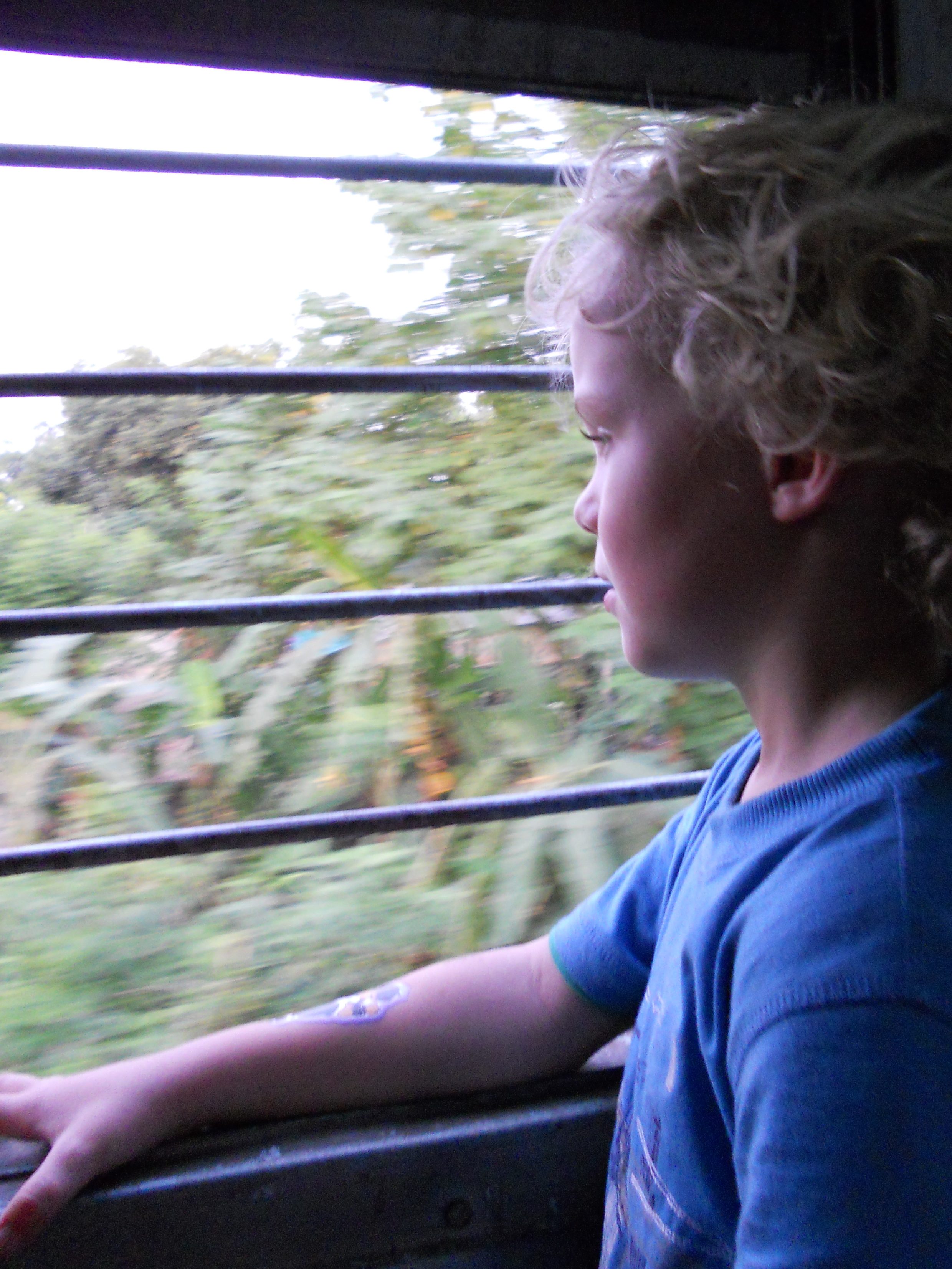
“What the hell is going on out there?” I asked a fellow passenger in the quickening darkness of a train carriage at our first stop en route to the north east of the Indian sub-continent. We had arrived in Siliguri from Kalimpong to an energy of agitation and fast-spreading rumours of an imminent strike. Advised to get to a safer place, I had picked the tiny remote village of Madahirat where I hoped to take Nic on an elephant safari through their local national park, Jaldaphara Wildlife Sanctuary. The subject of my demand stared back at me as he sliced his finger across his throat. Before I could take it personally he explained in Hinglish, “One woman dead. Head off. The cause of passengers leaping and running from their carriages, cameras and camcorders at the ready, was the macabre fate of a woman who had slipped getting onto the train at our very first stop. Decapitated.
As the lights went on in the carriage, the crowd outside, filled with gore from their amateur filming, became a mob as they turned their attention on something to release their restless horror. That something was me. And as more people gathered, the shouting began. Banging on the side of the carriage. Shrieking for me to get off the train. A riot had begun.
I kept my eyes averted, trying to ignore the attention, fixing my gaze on my lap where I was holding Nic’s head, stroking his hair, keeping him out of sight while keeping him emotionally safe. As I began to gather my belongings, someone bolted the doors.
There was just enough English on my side of fate to be told not to comply; not to move; not to respond … no glass in the carriage windows meant nothing to break and solid steel bars meant the barrier would hold. The police did eventually arrive with their sticks and moustaches to clear the mob, the dismembered body and get the train running again. Hours had passed.
By the time we arrived in Madahirat it was around midnight. I was still wide-eyed and shaky carrying a sleeping child under one arm, my backpack on my back, his backpack on my front and various other provisions under my other arm. A worried Mithan Das, proprietor of Hotel Relax, a hole-in-the-wall style hotel with roll-up garage door frontage was waiting to take the load off; I had kept him on the phone for an hour during the riot so at least someone knew where we were if we were ripped from our seats, each other, and even ourselves.
A day later the entire area erupted into a situation of strikes, riots, mob violence and general unrest as we were forced to immediately go into lockdown in this grungy homestay in a no-horse town. The year was 2010.
Fast forward to fifteen years later, I found myself as a solo passenger in a getaway taxi from 4.30am gunning it for eleven hours from Bir Billing to Delhi. Airport closures and missile strikes in the north west of India and a flight out the following week meant I had to move fast or risk being stranded in the mountains. On previous trips I have longed for fate to play the hand of keeping me in India indefinitely but, seven months away (eighteen in total) and already mentally and emotionally prepared to be departing two weeks later, the threats and speculations of war fuelled a mama bear motivation to see my son. I became fixated on getting the fuck out as soon as possible.
An astrologer told me after the incident fifteen years ago that India would always throw up monumental issues for me and—hoo-boy!—does she always deliver … be that on Indian soil, in the form of geopolitics, or back home, in the form of home and relational dynamics, as a consequence of my being in India.
A friend in Bir Billing in the foothills at the Himalaya told me that India is cuffed on one side by Bangladesh and on the other by Pakistan.
Fifteen years ago Nic and I unwittingly crossed into an area of conflict that included the derailment of trains and the fatal stabbings of foreigners as riots tore through the north east cuff in a fight for sovereignty in the area known as Ghorkaland to those seeking independence from India. This time I was also in a small northern mountain village on the opposite side of the continent where the other cuff was fighting again in their decades-long grab for Kashmir and a crack down on terrorism. In 2010 the conflict was very localised and we were right in it. The police commissioner, acting on behalf of the British Embassy in service to our protection, arrived at our door to instruct us to not even think of getting on a train or, for that matter, to go more than a few hundred meters from the homestay. “You will be at the mercy of brutal mob murder if you venture out”, he added. There was no malice, just a need to convey the severity of the situation and ensure I understood this was not a matter to overcome.
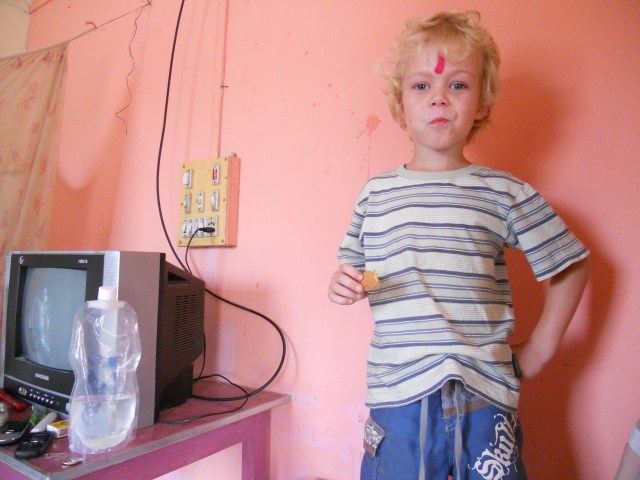
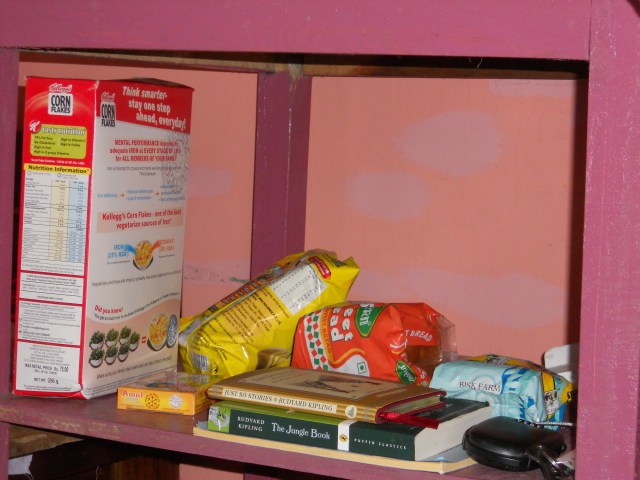
In this current situation I was not in immediate danger, bar the possibility of a misguided missile going off course en route to one of the many military bases in the area. Both times transport was an issue. Last time train stations were being shut down, this time all the airports in the north and west were closed—the terrorists were using civilian aircraft as a shield to shoot missiles that India couldn’t bring down without the risk of hitting said planes. Most significantly though is that both times my location was geographically on the wrong side of the conflict putting the zone of danger between where I was and where my flight was. In 2010, several days after we went into lockdown, our host rushed in saying we had 20 minutes to pack; a jeep was coming to smuggle us out. The rebels had declared a 3-hour moratorium for people to go out for provisions. It would take approximately three hours to get over the bridge that marked the boundary and if there were any glitches along the way, we would be in severe danger and in violation of the curfew. If anyone stopped us, he added, we would have to pretend I had a medical emergency. I doubled over and cried … briefly … stood up, flexed, wiped my eyes … pulled out my geranium moisturiser for these emotional crises … and then packed at breakneck speed while Nic listened and sang along to songs on his iPod, munching on the remains of the dry cornflakes, crackers and processed cheese we had subsisted on for days, the remains of the red dot on his forehead from the morning’s pooja, smudged across his eyebrows.
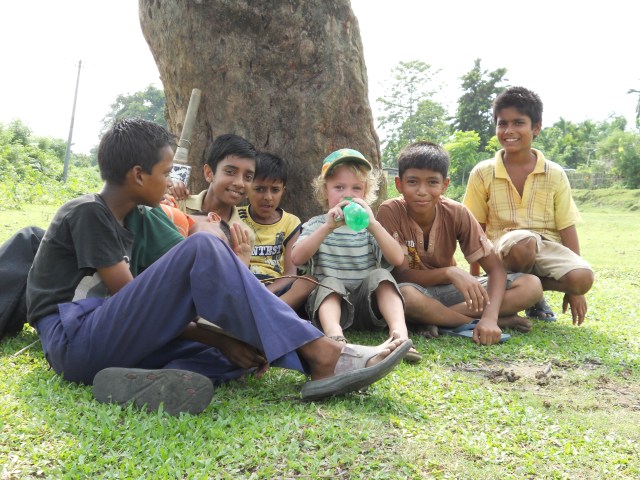
The delight of travelling with a 4-year-old is that I had to get creative. With a child it’s important to keep them informed whilst keeping them safe—physically as well as emotionally. And I got to perceive the reality of each moment through his eyes whilst managing my anxiety as a separate monster that in each moment was only a reality of potential threat rather than an actual threat. The reality was that we were stuck; the reality was that there was violence and murder close to but not in our tiny village; the reality was that we could play in the park and Nic could play cricket with the village boys; the reality was that we had an ancient TV that played Tom & Jerry and Nic had an iPod with hours of stories; the reality was that we were still mostly on a superb adventure isolated from the rest of the world.
This experience fifteen years ago shed a different light on my recent evacuation drama from missile strikes and the threat of war between Pakistan and India. It helped me keep perspective. It gave containment in a situation with zero support. But I was still afraid.
In a world where emotions get labelled negative and positive, and false positivity seems to be lauded over pragmatic and oftentimes necessary negativity, I get exhausted by people accusing others of choosing to live in fear … when fear is the exact emotion one has to live in when needing to react to a terrifying situation. Fear has been my friend. Without fear I would have remained in my marriage; without fear I would have been too trusting in too many situations; without fear I would have boarded a train to imminent death; without fear I would never be motivated to take action out of harm’s way for myself or my child; without fear I would not be guided to make decisions based on gut rather than brain. Every emotion is a tool in our toolbox and the key is not to throw tools out when they’re not working for something but instead learn their purpose and function within their range of benefit to the task at hand.
India stimulates every emotion in my being and shakes them all loose. I am in Cape Town now to calm my sensory overload and prepare for another departure later this year … somewhere other than India this time. India is always and forever my growth point, but I just feel I have had enough growing for now.
My grandmother, Diana Mellor, was born in Mussoorie, India. Activist, artist, storyteller, writer and something of an enigma and inspiration, I felt the way she was also an outlier like I was meant that perhaps we both came from another world. My father—her son—slipped between convention and this other dimension. Our curiosity, humour and mischievous nature run like a thread from her down the paternal line and continue through my own son. In my memory, she was one of those beings who always glowed with radiant light and I often consider her to be my real mother in terms of character traits and looks. Her silky slightly-strawberry blonde hair remained that way almost until her death in her 80s and, although I can’t claim to have kept my own grey at bay, I have her and my father’s big blue eyes that she would declare came around corners before I did.
It was once I had discarded the parts of my life and my Self that needed shedding and began to build (literally) from scratch, a new life and home that I began to fully comprehend how much of an influence her eclectic house, filled with treasures from her travels, motivated my own treasure-filled sanctuary.
In Colonial India, expats would go to the hill stations in the heat of summer and to give birth. Her Irish mother fit this demographic, hence the geography of her becoming in the world. As a judge in India in the early 1900s, her father was likely not one of the good guys and yet I do often wonder if Diana’s compassionate heart, deep wisdom and stoic acts of courage were a result of good modelling or bad; whether she became who she was because her father too was against the system of oppression or if who she became was in fact an act of rebellion. My father too was something of an outlier, acting perhaps unwitting in alignment with his mother’s core values despite them being somewhat unusual in the political climate of South Africa in the 70s and 80s. This is the genetic line I follow and one that has created a chasm between myself and a family that cast me out for my perspectives, my diversity and my differences.
How this relates to where I am right now and the way I choose to live my life—now that I have unshackled myself from the structures that kept me bound for most of my life—is the polyamory I am currently engaged in. It’s not what you think … let me explain.
Diana would dress up as a gypsy at our birthday parties and tell our fortunes, something quite intriguing in the societal construct of the 70s. In my memory this was a regular occurrence but I can’t actually remember if she told my fortune just the once or if it was my neurodivergent brain that held onto it for its mystery and, to a degree, a truth I would only fully unravel decades later.
When she told my fortune, she would tell me I would marry a man who rides two horses at once and I would spend my marriage stitching up his trousers. Although I am not sure I ever stitched up any trousers, both my husband and the lover I took after leaving him (ok, maybe a few more too) always had a couple of fillies to ride.
Despite this duplicitous behaviour by my then husband, I can’t help but wonder if the real cause for my divorce was in fact my own affair … with India.
Diana had, in her final years with Parkinson’s Disease, begun living in parts of her brain that transported her to the bygone era of riding on elephants through the jungles and seeing tigers. Ironically, this was when I got to know and understand her deeper and this is when the seed that would take another decade to germinate was planted in my psyche.
I hadn’t intended to travel to India—the end of the 20th century saw me in London, working in Investment Banking and way too invested in a pseudo lifestyle to follow any gurus or hippies to a land I didn’t trust for its cleanliness or safety. But the airlines had other plans. Not being able to get from Nepal to our next destination, China, from any airport other than Mumbai, I plotted a route overland from Kathmandu to Varanasi, through Bodhgaya and Agra and touching into Rajasthan before an overnight bus ride down the west of the sub continent to the airport.
I didn’t intend to stray. I unwittingly fell in love. Returning to South Africa in 2004 was preceded by a two-month pilgrimage, beginning in Mussoorie and weaving around an extraordinary number of towns, villages and cities throughout India. I didn’t find Diana’s birth record, which was the deeper intention, but I forged a deeper bond with this lover. It felt like I was cheating; the marriage couldn’t include such an intense lover. I fell deeper still in 2010—once separated from my husband—when I took my then 4-year-old backpacking for 5 weeks across the country.
After that, I sold my diamonds and my shoes and anything of value that I no longer needed, to fund tickets and travels back to arms so much more loyal than what my marriage and my subsequent lover gave me.
And I was faithful to her for over a decade. Until my gap year.
I fall in love with cities and towns and villages now like I once fell in love with men. From SriLanka in December 2023, I returned to India with resistance as though I was being forced back into a relationship with something I might have outgrown. She took me again, reluctantly at first and then I was hooked again … until I went to Nepal for a few months and decided this was definitely my greatest love.
So, no, I am not married or tethered to a man straddling horses any longer and the only stitching I am doing is the weaving of a new heart … straddling countries like lovers between whom I cannot choose.
“Please speak of how you view the possibility of attachment to non attachment,” I ask the dharma teacher.
I am at Kopan Monastery to heal my body and mind from resonating at the frequency of the fatal diseases I might have contracted from the dog bite, and to recover from setbacks encountered on the home front. On a three-day water fast, I travel the darkened tunnels of a healing crisis with fever and fitfulness and I find the comforting containment of 700 monks and nuns chanting and performing pooja to be instrumental in my wellness.
I notice, as I ask the question, my hand running fingers through the thin blonde hair I have always equated with femininity as I admire the teacher’s beautifully smooth-shaven crown. I am drawn to life in a nunnery and commit to shave my head on my arrival in India … yet I also know how fickle I can be. Life as a renunciate mocks me as I consider relinquishing the bower bird aspects of my identity … the beautiful shiny objects I have around me, even on my travels.
I sit each morning as an observer, an outsider looking in on the monks as they arrive dressed in robes that simultaneously shed their identity and give them one. They prostrate and take their seats. They are vessels, showing up in service to the prayers; chanting for others what others can’t do for themselves.
I sit and contemplate on no more than what I witness. The pooja, the music, the clapping away of evil spirits. When a British Colonel arrived in Lhasa after gunning down thousands of Tibetans, he is said to have felt great pride in the Tibetans clapping for him on his arrival, mistakingly believing their attempts to dispel evil as their celebrating his prowess.
The opposite of doing is not apathy; it’s allowing … a yielding rather than a seeking. Meditation is an action. It is a deliberate and intentional allowing of all that is, in order to practice not attaching to any of it through the sense organs. Gathering to wash the plates and utensils from food preparations, the chatting and community is as profoundly important as the nourishment from the simple food. Quality of life is expressed through moving hands that find their intelligence in ordinary tasks. Is this what malas could be used for? I wonder.
As the fever passes, I feel both relief and disappointment. Relief that I may have healed myself from potential suffering. Disappointment that I may have saved myself from dying. If you know me, you will understand that this is not in fact a depressed dig in the darkness, but a lightening of something quite liberating. Regardless, a little more context may be required for those who don’t know the true meaning of the word GuRu and may be more attached to just the one syllable without considering its counterpart.
I have never felt fully committed to this incarnation. Call it trauma, abuse, nervous system dysregulation … no matter … contemplating death these past days, I recognise that I am more attached to death than I am to life. So the tears I shed are related to feeling that dying from a dog bite in a country that honours death as much as it honours life would be a better fate than ultimately taking that long walk into the ocean when I am done with this so-called me I am becoming less and less identified with as I travel to integrate the past five decades of my fabrication.
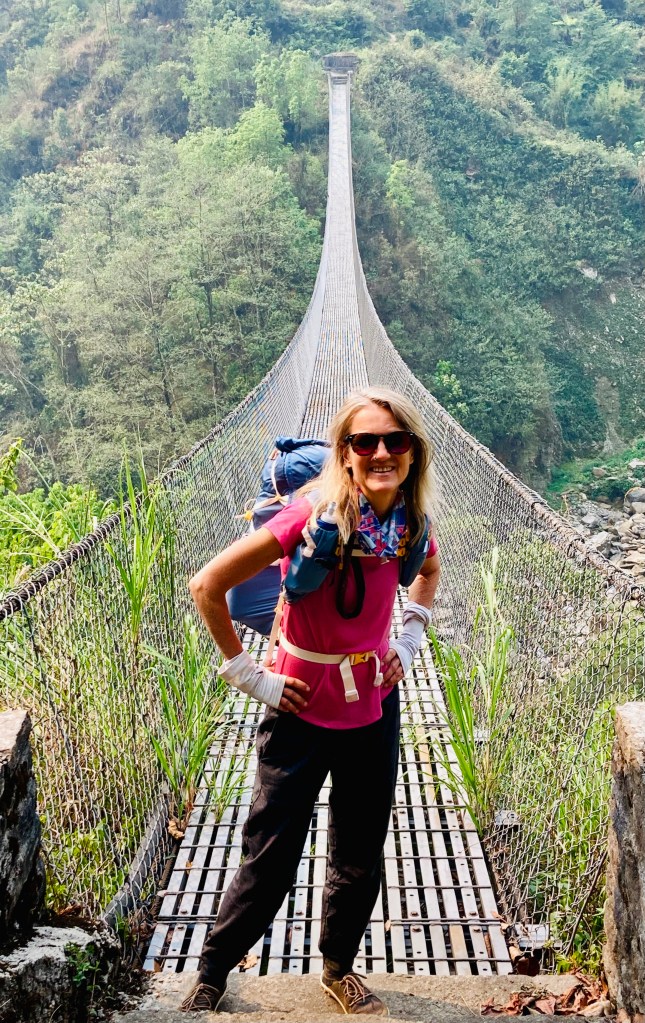
There is a middle ground always: not attached to either life or death but fully committed to and incarnated in both. Like a suspension bridge that must be fully rooted in both banks. Straddling. Clinging to neither … and also to both.
My writing habits have gone into holes and tunnels and transcended the notion of linear time. There are gaps … chasms. And, as with my meditation practice, I have to keep coming back to the cushion to start again.
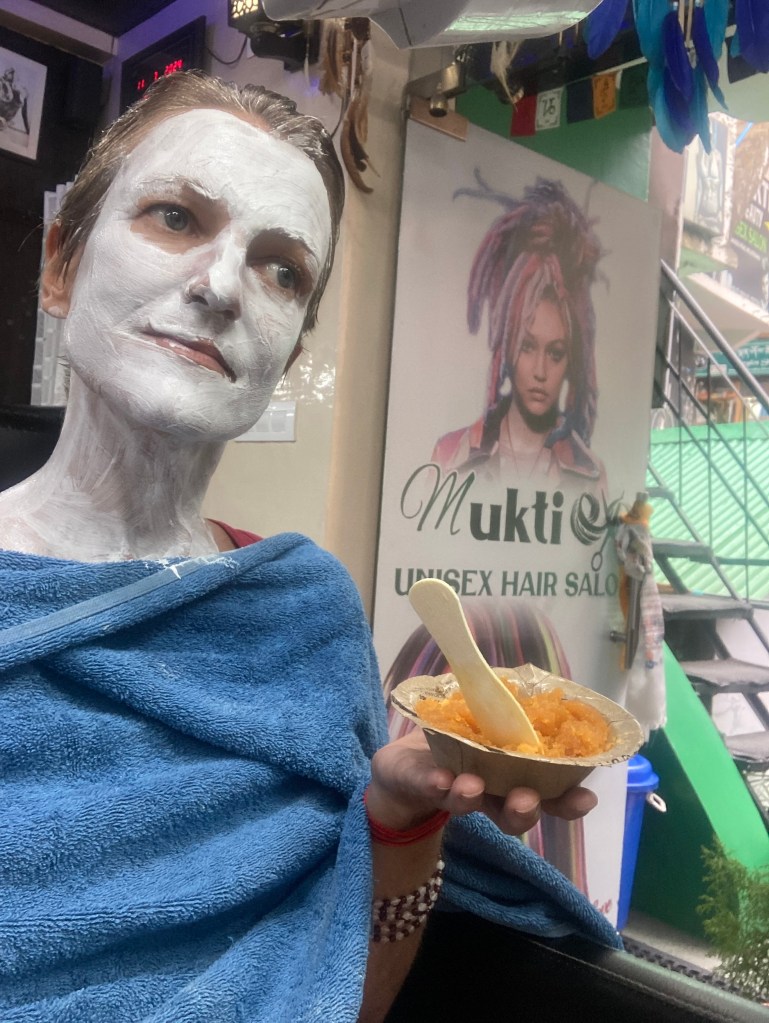
I am in India now at Deer Park Institute in Himachal Pradesh. So much life has happened between my time here in February, and this time now. I have written less than I aspired to, traveled and explored way more than I imagined, connected, studied, expanded (and also contracted), integrated and shed so much of who I believed myself to be. To honour this new version of myself that can’t recognise myself in the mirror anymore, I travel to McLeodGanj, two hours each way by cab, to a hairdresser I met in February. My instruction to Mukti back then was still my usual, “Just the ends off please; I’m trying to grow it”. This time I am not bold enough for the full head shave—yet—but I flick through Pinterest to show him some images that match this new Penelope V11.9 and tell him to work his magic. I close my eyes and breathe.
This is the only death I need right now.
Monsoon season is a flushing of all the rubbish; a cleansing of the earth and a transition into autumn. India has six seasons instead of four … six opportunities to adapt or die.
Pokhara—Nepal’s Promised Land—comes with its own unique challenges and blessings. Bars and restaurants take over the Lakeside area with names like Crave and Paradise; there are strip clubs now and a Pokhara Disney Land. Tourists from all over the world consume in a frenzy anything on offer. I pass people on the streets who look like they have just stepped out of a video game and I am offered ganja and ‘a night to remember’ whenever I cross a certain threshold on the main road. Twenty-three years have not been kind.
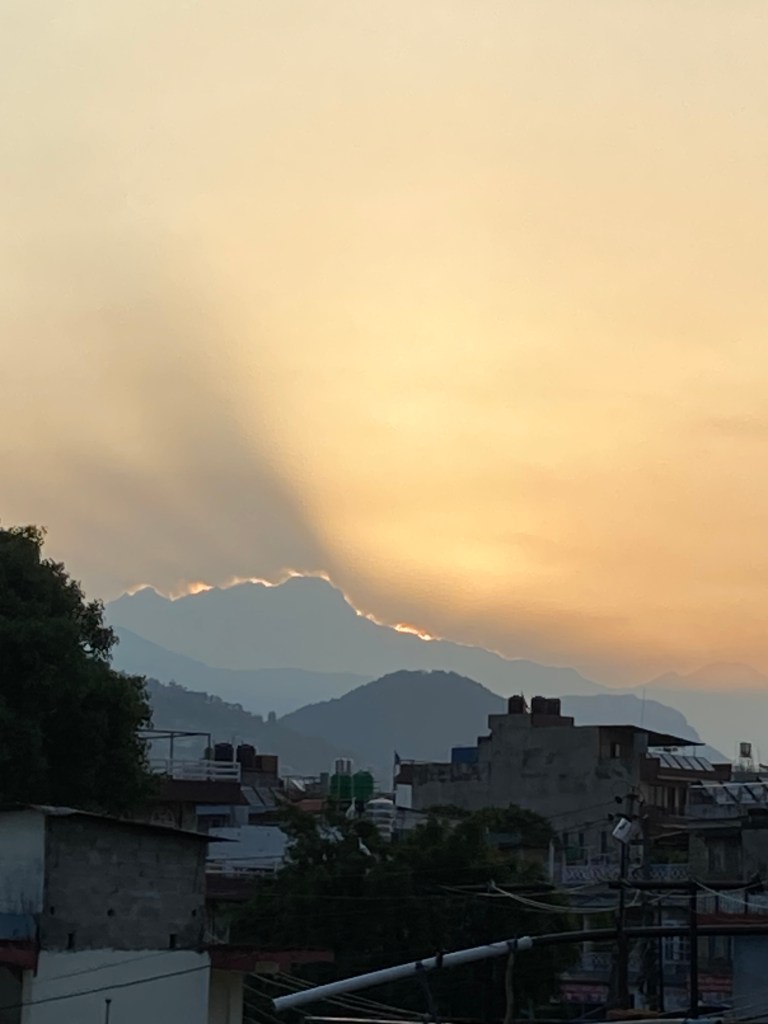
Pokhara also comes with a gift I could never have imagined or anticipated: a room in an apartment with a balcony and Himalaya views. It takes several weeks before the rains clear the sky enough to see them and, when they appear, their golden morning halo is worth each day in wait. I share the apartment with the elderly Kashmiri man who, with his wife, hosted me in SriNagar after snow trekking in Aru valley; he has a shop in Pokhara and all he asks in return is that I attend to customers on Fridays while he goes to Mosque.
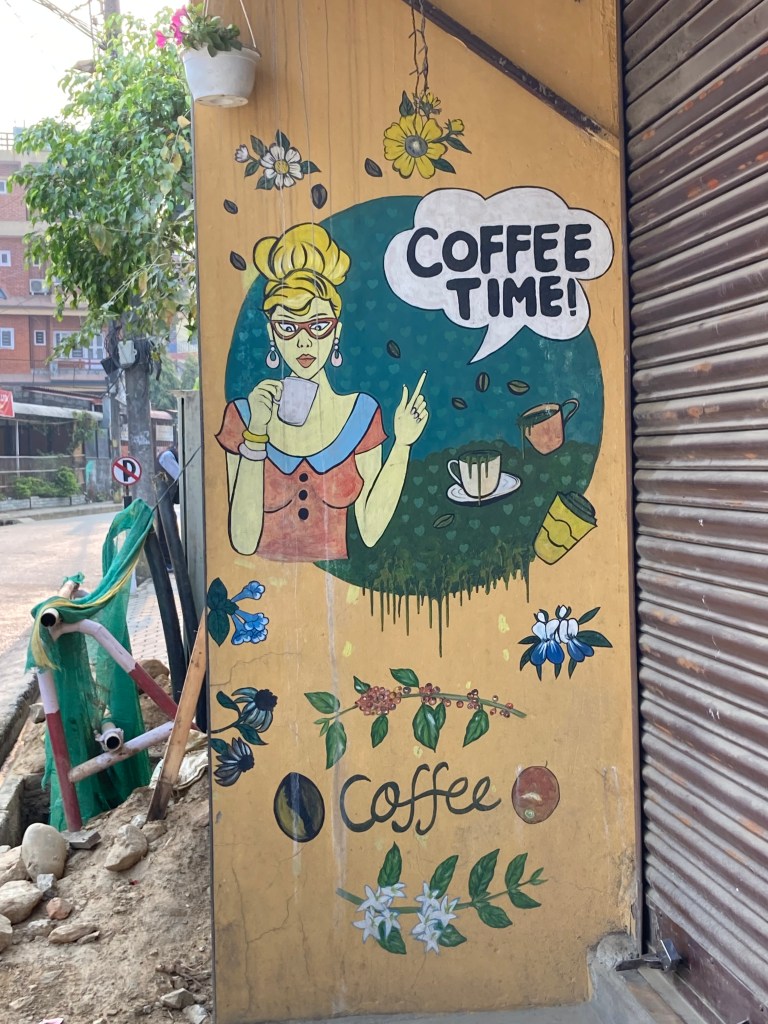
Whilst most people in Pokhara troll the main streets and the lakeside for dopamine hits in the form of fast food, ganja, liquor, shiny plastic trinkets and karaoke, the beautiful duality is that those I judge are also the ones who sleep in. I seek the sanctuary of the peace that descends in the early mornings when I go for my runs, my walks, my solitary yoga, and general contemplation. It’s the time of day when I am able to notice the things that matter … like superb coffee, tranquil vibes and friendly strangers … kindness and beauty also overflow here.
“The word peccadillo, which means a ‘small sin’, comes from pecus, which means ‘defective foot’, a foot that is incapable of walking a road. The way to correct the peccadillo is always to walk forward, adapting oneself to new situations and receiving in return all of the thousands of blessings life generously offers to those who seek them.“ ~ Paulo Coelho, The Pilgrimage
And, as in The Pilgrimage, I too walk the path of generous blessings … whilst my shadow confronts me in the form of a black dog who snarls at me on morning runs and rips to shreds the stick I use to defend myself. With the crazy love affair I instantly develop with duality, the only way I can find harmony is to follow my compulsion and get out of the city only days after my arrival. Pokhara is just the foreplay; to experience the orgasm, there are literal mountains I must climb.
As the Quintessential Pioneer, Explorer and Adventurer, I am usually questing at speed ahead of others … getting lost to find my way, and generally moving through landscapes with determination, strength and courage. So choosing to take a guide is not easy. We walk together to the permit office and after just those few kilometers I know we will travel well together. Ten days, I say to Tikka, and we can decide if we want to go further after that.
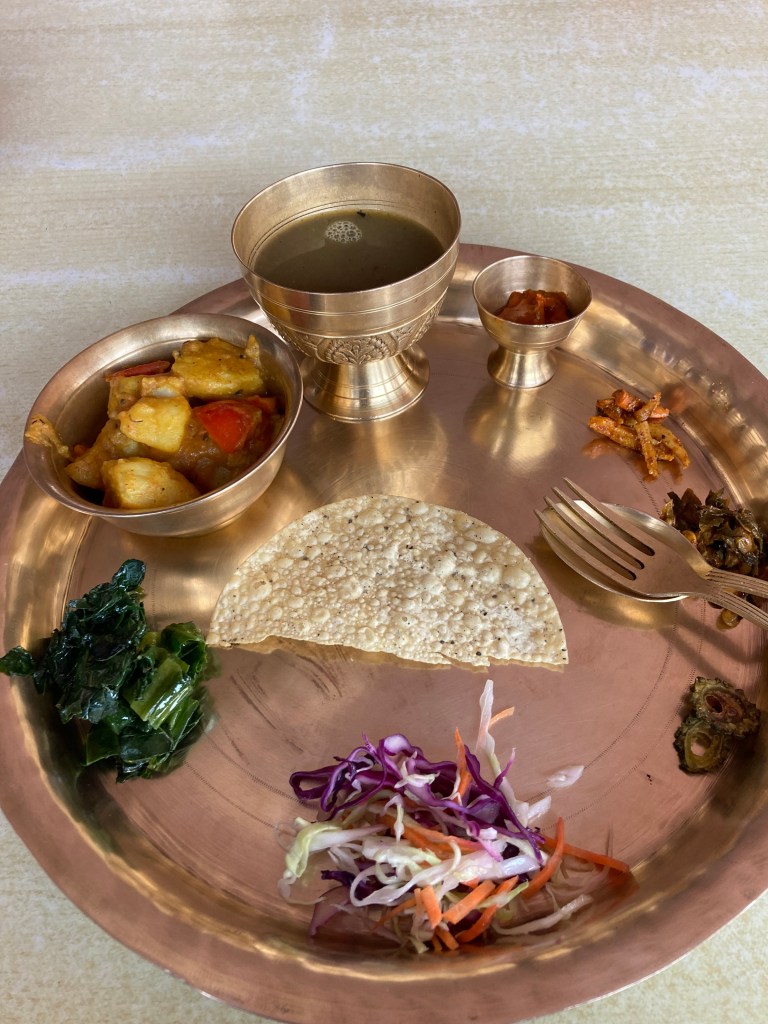
I last trekked in Nepal shortly after America erroneously declared war on Iraq. I have flashbacks to the person I was trekking the then 21-day Annapurna Circuit 23 years ago, fresh out of Barclays Capital with boots I had worn only the once in the High Street adventure store, carrying my 13kg Macpac (which has subsequently done several local trails and Camino de Santiago routes), crawling across suspension bridges at first and then acclimatizing to fearless scrambling across landslides. No smart phone, no Google Maps … no AllTrails or Komoot … only something printed off the relatively new Internet called the YetiGuide, pinned to my pack in a ZipLoc bag. If we got lost, we didn’t know it, because we were always somewhere and there was always a village tap to wash at, a hot dal soup, and a floor to sleep on. Each day just another day on the mountains, we walked in bliss of our youthful ignorance. It’s impossible to know the landscape before walking the territory so the gift is always in letting go of having to know the way.
It feels like having a guide is a betrayal to my independence … and yet somewhat reassuring to be able to follow for a change; to learn that he too follows no maps besides his own instinct and intuition, finding new pathways where new roads have cut away the old trails … that he too is sometimes lost without being lost. The first day or two exposes some resistance to the mecahnics of the trekking: recalibration around not needing to check that Tikka is ok; acceptance of his checking that I am ok; allowing him to carry my extra water bottle; submitting to his carrying all my vegan snacks, and feeling comfortable with his managing nightly arrangements for a free bed in teahouses of people he knows. It just takes me a few days to trust to let go of the needing to know; to sink into the moment-tomoment step-by-step and breath-by-beautiful-breath.
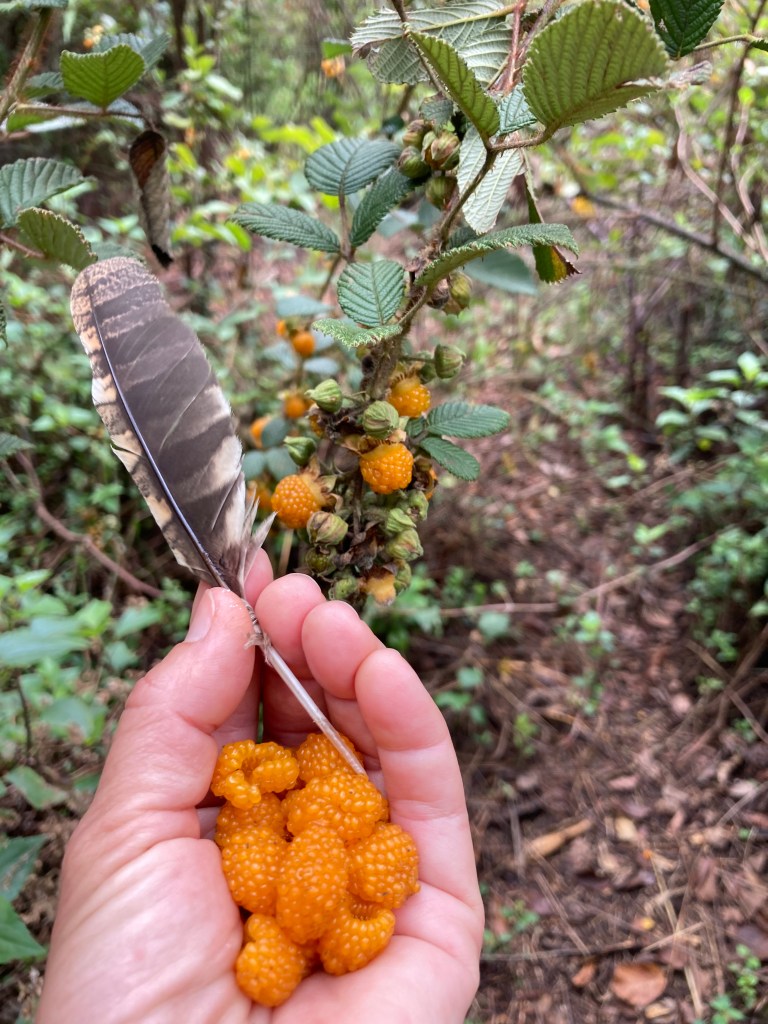
I am a wilderness guide who is also capable of being guided. Slow and steady the leader becomes the led. But slow and steady doesn’t always work for me. I overtake and usurp the leader, transforming him into the led. A potential power struggle becomes a game and then a comfortable rhythm as we mostly walk in silence with occassional fountains of inspiration at smoking stops (by the time we trekked again, he had quit). We climb relentless stairs for hours and days, get drenched in a thunderstorm, dry ourselves in a house that emerges from another dimension, walk in slow motion over literal carpets of rhododendron flowers, cross exposed ridges, push through thickets, gorge on wild berries, engage in fireside therapy with fellow travellers, and wake up to views of mountains that seem like a mirage. Days feel like months as inner landscapes of alchemically putrefying DNA beneath dirty hair and dehydrated skin becomes woven into my being as rapidly as the outer landscape changes. Some day—perhaps in another 23 years—I will have integrated the gavitas of this passage through the mighty Himalaya and grow the capacity to express fully the impact it has had. Not now.
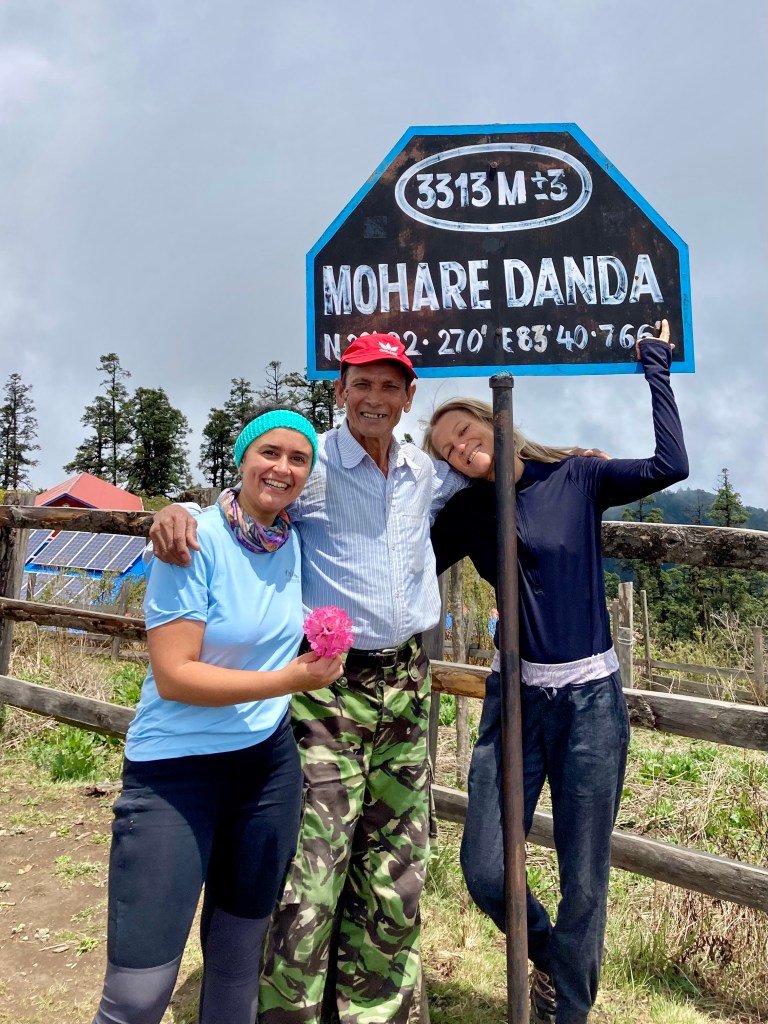
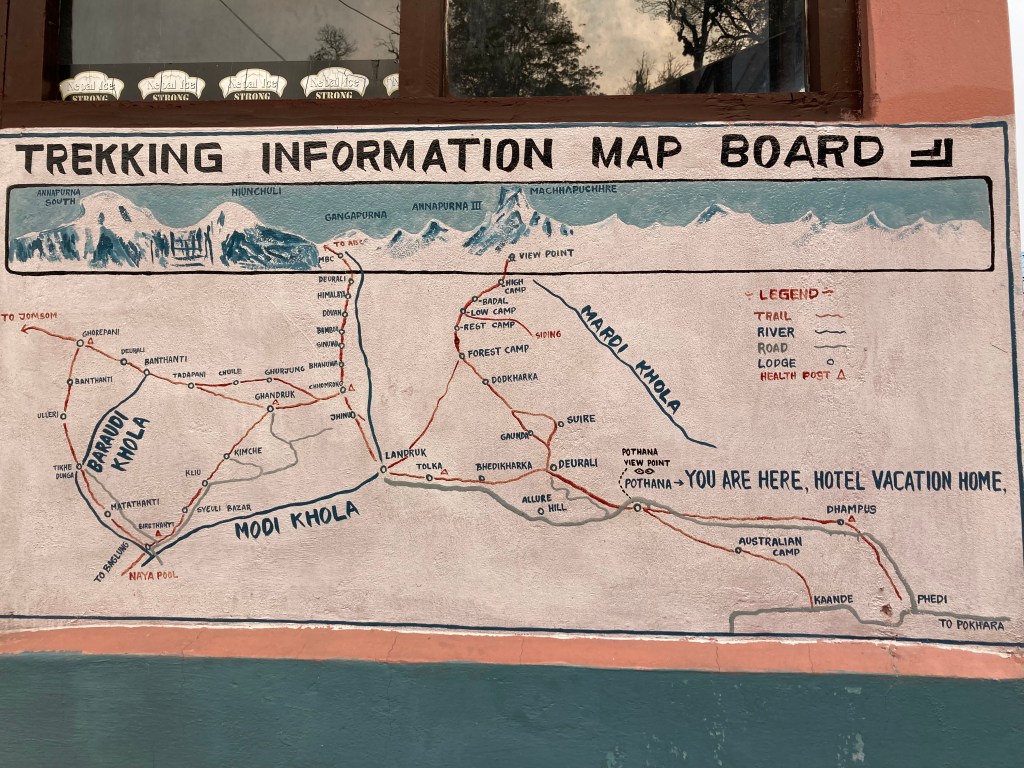
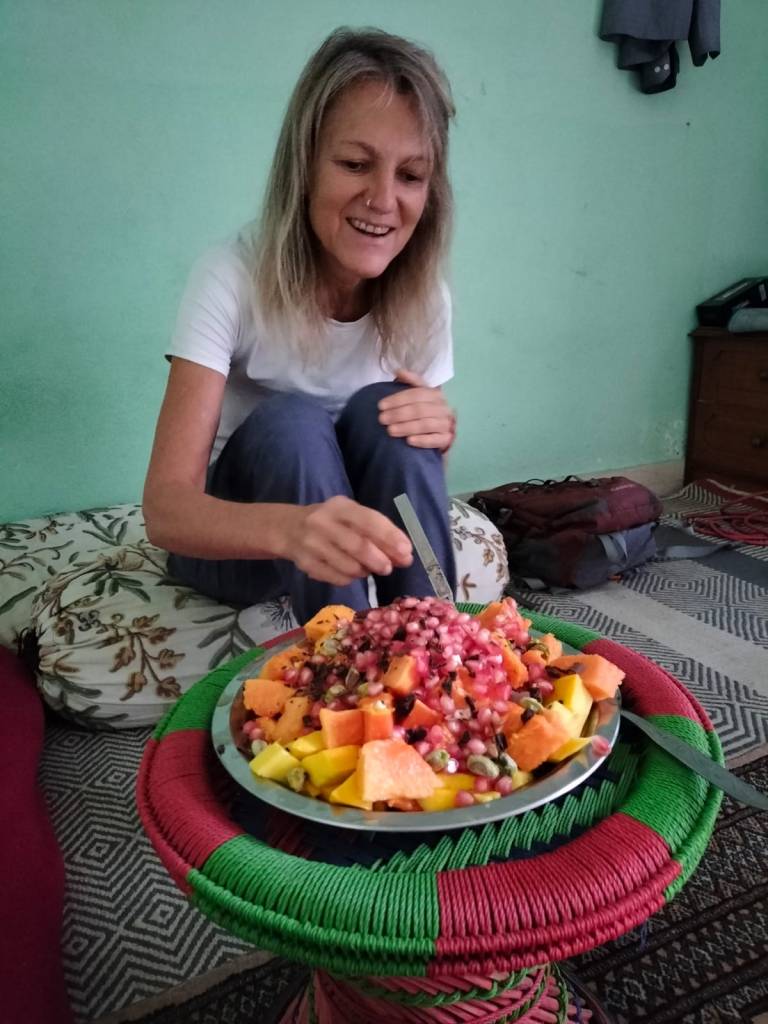
Pokhara becomes my base camp for over a month as I head off on explorations from there. A 10-day trek combining Panchase, Mardi Himal Base Camp at 4,500m, and several villages—including Lwang and Dhampus—flows into a week overlooking Begnas Lake at the tranquil Mountain View Eco Farm, and a return to Pokhara to meet a Spaniard I met at Low Camp. This flows into a 6-day trek to Mohare Danda at 3,500m, a trek to the Peace Pagoda, and a bad judgement call hiking to a homestay in Sarangkot for two nights. Each time I leave the city I settle, and each time I return I instantly vibrate at the frequency of fresh-brewed coffee, slow roasted cashews, perfumed fruits and Amul dark chocolate. I find I can no longer walk anywhere without confronting intense overstimulation. I duck into Disney Land several times to escape the vicious city dogs and slip dimensions into my Xanadu days, lacing up white skates—circa 1980—and whirling around the rollerskate rink. Courses in sound bowl therapy and Thai Massage in the city keep me away from zombie shopping and dopamine eating. And when I find myself resonating more with the latter, I make the decision to leave for good. It’s way too easy to sink into the familiar comforts of consumerism.
I have travelled well since then: back to the Mountain View Eco Farm at Begnas Lake where a storm swept through snapping massive trees and displacing anything not tied down; I have found hiking trails and cricket games from the hilltop heritage town of Bandipur; I have spent a week adventuring in the forested Pharping Dollu enchanted by the multiple temples, monasteries and sacred caves, and I have explored every square inch of the ancient and magical city of Bhaktipur.
I discard cells and possessions as I go; I lighten my load of attachments as a practice towards full renunciation. The less I have the more I am. The inner glamour girl is dead and the embarrassing number of little black dresses and designer shoes she clings to in Cape Town must go too. Born with fists tightly clenched, we ultimately all die with palms wide open. And in between, everything gets rewired from earth to ether … body and spirit … as I move across the landscapes that remake my map. I must integrate now before I can weave these threads and new narratives.
This is my current territory and new reality. This is my handmade life.
(See my Instagram profile for more places and pictures of this epic adventure).
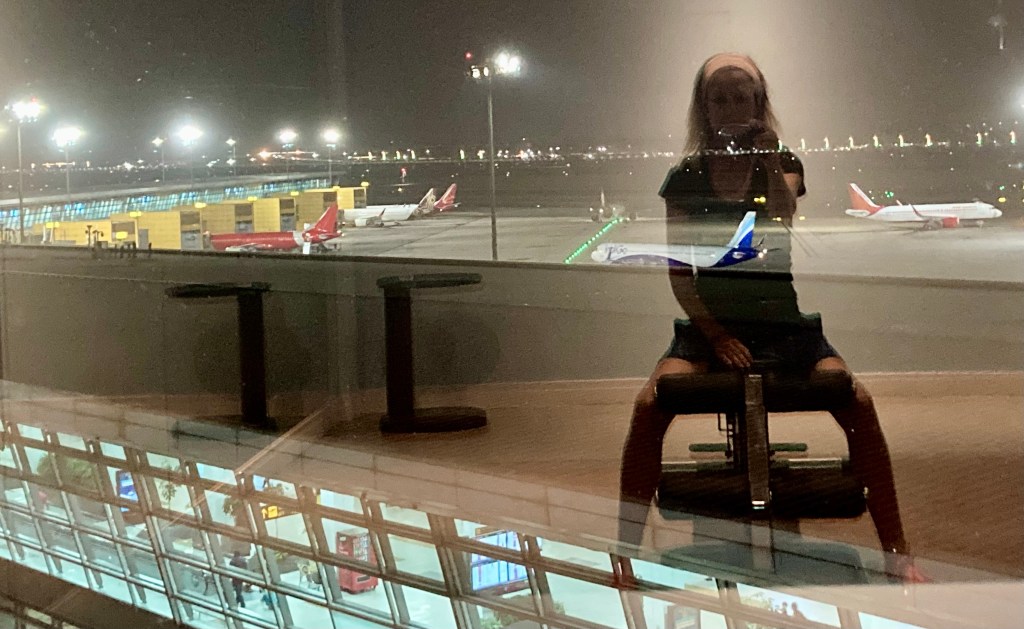
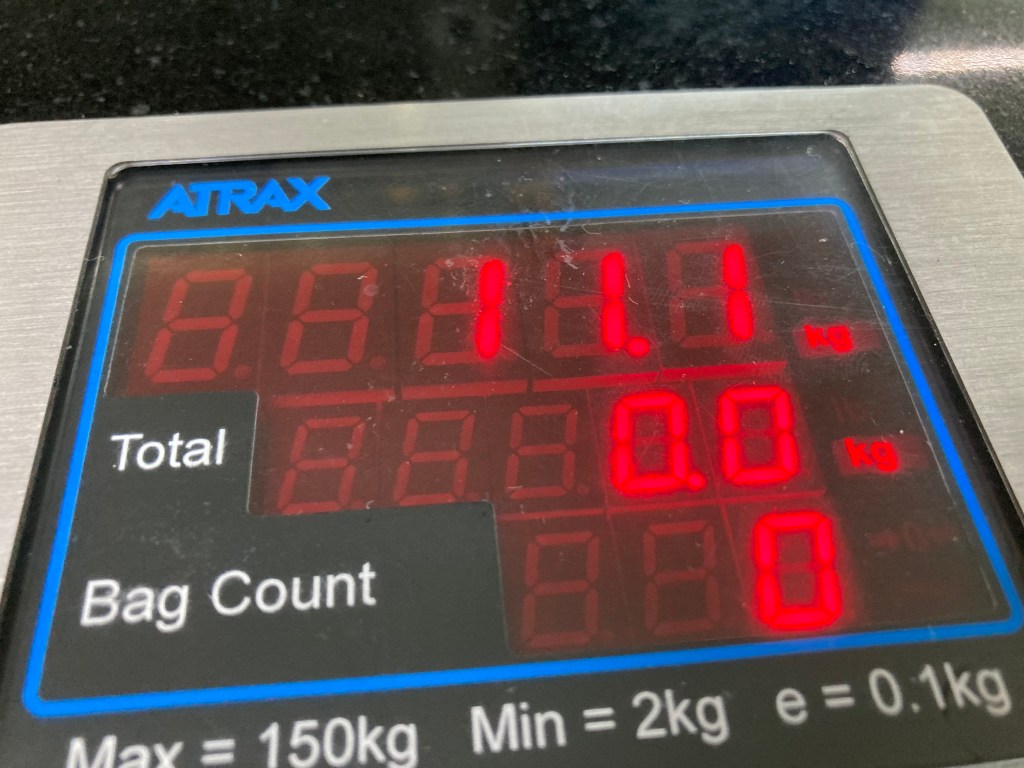
The calendar date is 11 April. The tiniest sliver of new moon glows saffron light from the sun. Eid Mubarak, it harkens. Navratri too. I check out of room 111 at the deluxe Delhi Terminal 3 hotel to check in to IndiGo flight 1155. It’s 11.11am as I hoist my bags onto the scale. My second bag weighs in at 11.1kg. I don’t know. But I understand. I can’t explain it … it is just so. Airports and aeroplanes are facades that make portals more manageable … more believable … less woo-woo. There’s absolutely nothing woo-woo, or comforting, about Delhi airport as the multiple security checks, without fail, leave my hand luggage spewed all over metal counters, where gloved hands perform surgery and extract seemingly innocuous objects from the bowels of my bags. ‘Yes, that’s a pen in my notebook’, ‘No, I don’t have a sharpener in my pencil case’, ‘A powerbank, yes, those are the cables for my laptop … uh-huh, a headtorch’. … duh (under my breath) … ‘Nope, I don’t have any lighter or matches’. ‘I don’t smoke,’ I thrown in for good measure. I get a visible sigh in response as he indicates for me to move on while I contemplate how I manipulated so much stuff into that bag in the first place.
There is that quintessential pre-arrival moment on the aeroplane when everyone starts shifting in their seats, fondling phones, craning necks and bobbing heads, ducking and elongating towards the windows … first this side and then that side, eager to find a gap. Clicking buttons and clicking tongues as the people in the window seats claim their entitlement to a full view of the kilometers-high mountains we begin to descend into. It’s terrific and terrifying.
Nepal is a country that is a slice of land holding most of the world’s highest mountain peaks … sandwiched by India and Tibet, now China, it has nowhere to go but skyward. In terms of surface area, if flattened it would be massive … bigger than the whole US of A in fact. The sight of the fluttering Nepalese flag mimics the mountain peaks with its double pointed triangle. Peaks and valleys make the country as much as they make the person. The quintessential Nepali Dhaka Topi mimics this too.
Same, same, but different echoes from 23 years ago. The name of a coffee shop I wanted to open. A parallel life. And here I am. Exactly where I always am. Draped in a garland of marigolds. The Nepalese Namaste affords everyone divinity in every greeting and is reflected in Well-Come signs everywhere with the hallmark symbol of Nepal: an outline of the bowed head of a woman, eyes downcast with hands in prayer position. This Kathmandu airport arrival is everything the Delhi departure was not. Reverence is a religion. Caressing the marigolds, I beam through the portal to Nic as a 6-year-old traveller in India as he grazed on the abundant marigolds at temples and celebrations and imagine him grazing on this garland. I miss him. And I feel hungry. But the expiry date on the bag of nuts is January 2082. I am suspicious.
To reinforce this time travel, I am told it’s New Year in Nepal in a few days. It will be 2081. Nepal is also an average of 15 minutes ahead of India, which is 3,5 hours ahead of South Africa. People’s birthdays don’t occur on the same date each year but on the day of their birth month when the moon is in the same phase as it was when they were born. My birthday in Nepal is not the 14th but the 27th of June this year—waxing gibbous 66% illumination according to moongiant.com. How many dimensions do I now straddle? My brain fires synapses looking for something familiar. A dog crosses at a zebra crossing—it’s black and white … chameleon identity crisis. The familiar can be dangerous though. It negates anything outside of my objective reality and offers no stretch into growth points of uncomfortable lack of knowing what I am looking at.
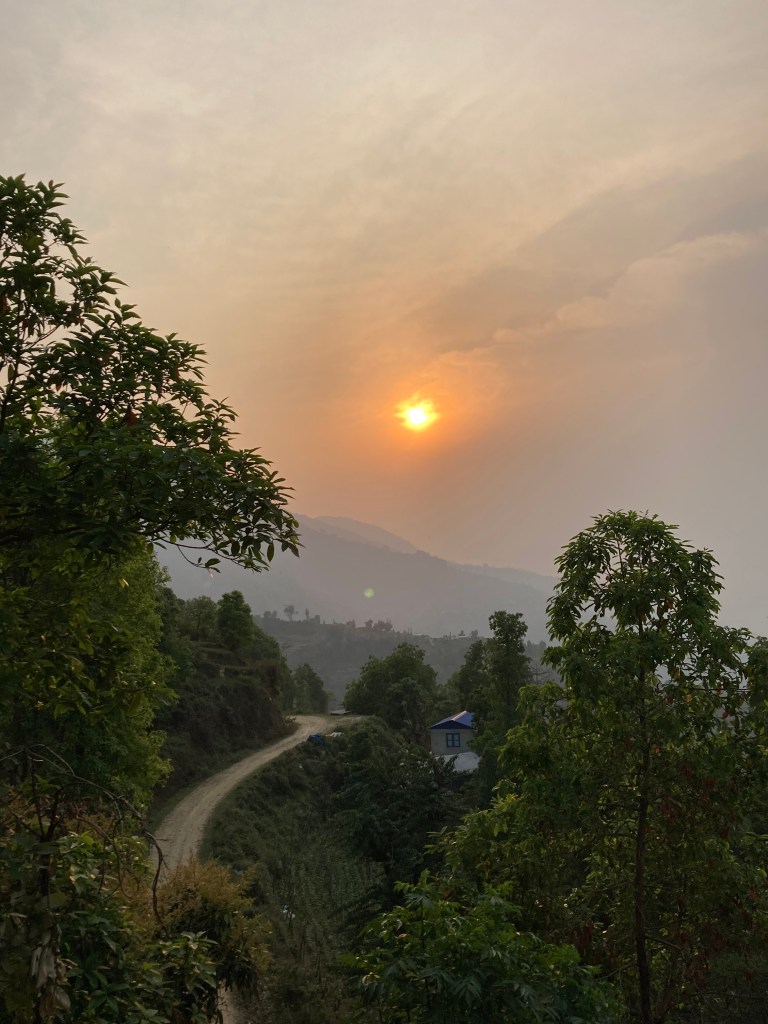
The sun matches my marigold garland; hazy orange suspended in smoggy sky. Recovering from being eclipsed—ego wounded. Three months ago I arrived in India from SriLanka to the same saffron orb between palms. Now it peeks between chaotic buildings and unfathomable wiring. Glitching like my brain. Trying to pull back the veils of disorder to investigate and discover what lurks behind … what awaits the blooming. A bald nun on a motorbike—a future trajectory beckons. ‘Get thee to a nunnery,’ said Shakespeare. I will one day comply. Everything is a possibility; a potential for recalibration and transmutation. My apprehensive inner electrician awaits the next instalment.
Trusting someone with my safe passage, I am teleported into a valley at night. Less than 30km, it takes many hours. I can’t find my bearings in the dark on a mountain pass. I feel trapped in time and space. Pass and passage come from pace, which comes from stretch, something I am unable to do. The passage is rough and potholed. The driver shouts on the phone while he paces. Stuck! Lost? My birthing is stalled and my arrival gets misaligned.
People often ask why I need to plan. It’s so I can give up the planning. It’s my dichotomy. I have to know where I’m going next so that I can choose not to go. I need to know I have a choice (just the one) to protect me from getting stuck where I am. So when we find the place I plan to stay for six weeks to volunteer, the reality becomes somewhat different as I recognise my patterns of usually want to leave the moment I arrive anywhere. I try and blame the new moon but it is aloof in its dismissal of my hollow accusation. The planets can’t be blamed either. It’s only me. Edgy and wanting to flee, it is only in establishing an exit strategy that I can yield to where I am.
Since the external is always a reflection of the internal, I work until my fingers blister and my soul goes awry with the next push out the birth canal. I take on a fruit fast and call a friend in Pokhara. He sends a car to rescue me … from nothing more than myself. I lasted seven days in purgatory … and that’s ok. I acknowledge that this is also a guide to show me my way and there is no mistake in the making of such.
Life is full of answers and this is only one question.
“How will you go about finding that thing the nature of which is totally unknown to you?” Meno























 WELL WORTH BEING