Joseph Campbell said, “Follow your bliss”. Pilgrims follow their bliss/ters.
On no past Camino de Santiago or long-distance local hike have I had to deal with blisters. The only trek I suffered from blisters was in 2001 on the Annapurna Circuit (Nepal) when I walked in leather boots I took out of their box to pack in my backpack … I didn’t walk in them once before boarding the plane to walk for 21 days across and over the Himalaya at 5,400m altitude.
Symbolically, my life in 2001 was plagued with abrasions that caused more pain than pearls and by 2016, my first Camino of 250km with my then 11-year-old son, I had recognised and was acting on my need to nurture my wounds.
Some people diminish their wounds; some deny them; some go into a trauma response and simply obliterate them from memory; some defend their wounds and use their pain as a badge of honour, and some just never quite manage to shine because that would mean giving up on the psychic injuries they have been subjected to.
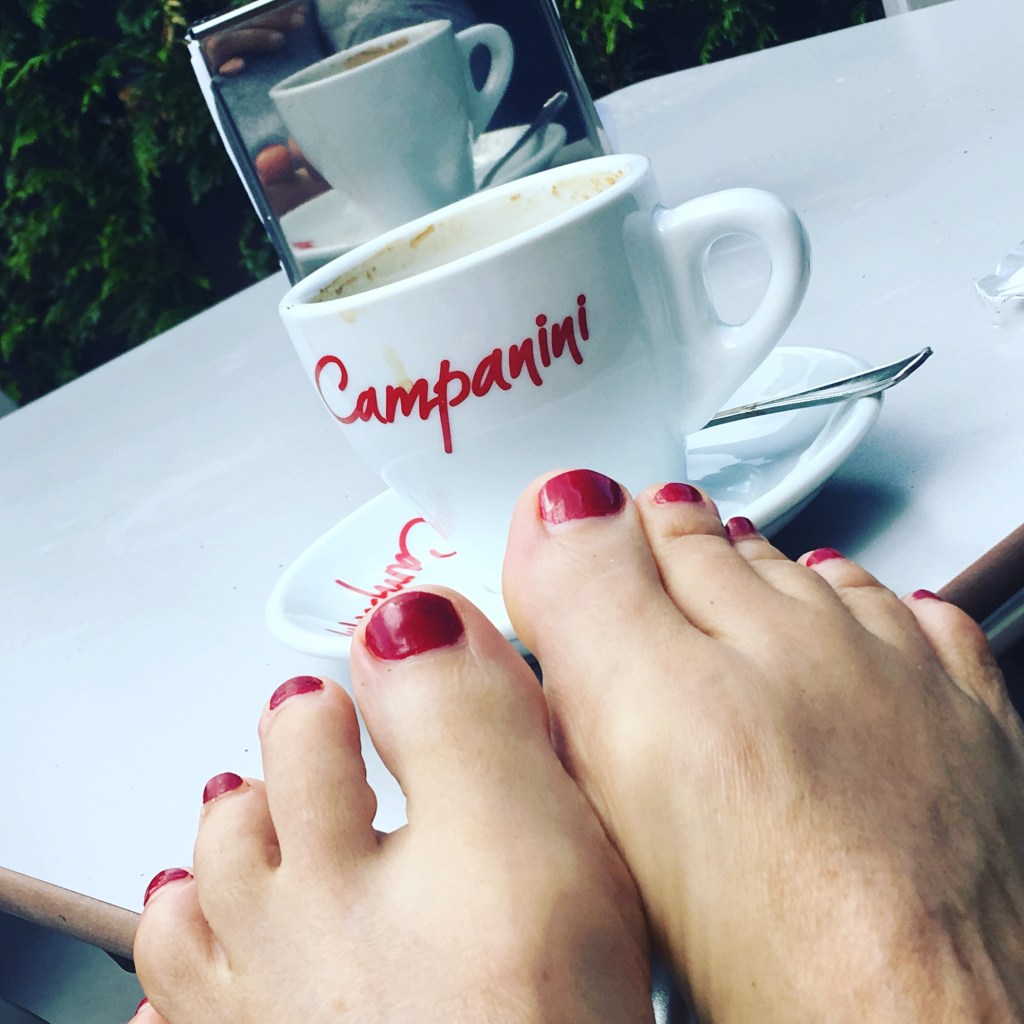
Adapting to different footwear—I now wear Altra trail running shoes for Camino and will be wearing T-Rockets running sandals on some days too—and conditioning my feet long before the journey, as well as every day before and after walking, is a good analogy for building capability and competency to face challenges … and also to recognise where the stone in my shoe is going to hinder my journey and where the stone in my shoe is the grit that the oyster uses to make the pearl.
It is erroneous to bandage and splint healthy body parts, so there is a call for discernment in how one treats one’s wounds, both from the past and those that present themselves currently. Self-care can reprogram one’s emotional, physical, psychic and mental bodies to engage differently with personal injuries or traumas and shift perspective from being overcome by wounds to using them as a pathway to healing.
As I walk this journey from next week, for Mental Health I will be intentionally working with fellow pilgrims who approach me with specific needs around grief, loss, trauma and dis-ease and I am cognisant of needing to be discerning in how much self nurturing and self supporting I must do in order to be able to support others on their unique walk to wellness.
We are not here to be perfect, we are here to heal. And the first part of any healing process is to recognise the wound as a symbol of healing rather than as an obstacle in its way. It’s important to not get too attached to the strapping and then fail to acknowledge that the wound is no longer there. Struggle can be used as a tool to justify one’s actions or one’s suffering and to eliminate the need to step up and show up. A wound isn’t a life sentence and a bandage isn’t a ticket to victimhood. Letting go of the identity of injury can be empowering and can create the space for taking on the responsibility of stepping fully into one’s essential self.
Take care on the journey by training well in order to diminish the risk of injury and by also preparing well by carrying a first aid kit.
Questions to ask yourself:
- How do I grieve whilst supporting others through their struggles without comparison?
- How do I create discernment between compassion and a bleeding heart?
- How do I bandage the internal wounds that hurt more than anything that bleeds?
- How do I relate to past wounds, injuries and traumas on an emotional, physical and mental level?
You can follow, support and share my Walking for Mental Health fundraising campaign on BackaBuddy. All my socials can be found on LinkTree.
 WELL WORTH BEING