Twenty Five: Death on the Carousel

‘Hm’, I said, not meaning for it to be such a short sharp expression of a somewhat surprising realisation. I often disappear into my thoughts; occasionally I get jolted back with the realisation that I have spoken something—usually a question—out loud. Today, sitting in an armchair in the library of Kopan Monastery where I am staying for a week, I found myself unwittingly tapping on my phone, writing about death. The subject had been discussed in the earlier dharma talk and, on entering the library, my eyes and hands thankfully landed immediately on The Book of Joy by Archbishop Desmond Tutu and His Holiness the Dalai Lama. I tend to experience excessive overwhelm when choosing a book in a library or bookstore and often the doors have closed while I am still drifting trance-like up and down aisles, touching and leafing through—and often sniffing—hundreds of books I fail to narrow down to just that one. It seems unjust somehow to eliminate so much unread potential with the accumulated value of hundreds of thousands of writing hours by hopeful authors. This is why ‘thankfully’ interjected there. As it happens, I read very little of the joy book. Surrounded by all those words and wisdom, a quite typical Penelope thought crossed my mind: I am more afraid of my luggage not appearing on the airport carousal than I am of dying.

I decided to unpack that—so to speak—in light of my current day of drifting in and out of sleep; my previous few days of stiffness in my knuckles, forearms and upper back; general tension and weakness in my body, and an incapacity to fully function. The now almost fully-healed wound on my right arm reminds me of the potential cause of these symptoms: a dog bite a week ago in Pharping Dollu. 

We are all on the limen of life and death and not one of us knows exactly when we will unwittingly cross. Yet cross we will. So, when the darkness beckons, I submit. Sometimes I go so deep into the dark without a flashlight and, to the alarm of many, I’m not afraid of staying there a while. And then I write and I share. But no one wants to hear these travel stories. People want to live vicariously … they want to suck the dopamine hits from my days on the road. They want romance stories not murder mysteries; they want beaches and sunsets, not oil slicks and smog. People want to be wooed by their projected fantasies onto the ones who leave; unwilling or unable to live their dreams into existence.

I have so often been dangerously and excitingly close to crossing that limen between life and death that I can freely claim to have intentionally dangled a foot over the threshold on more than one occasion. This time, however, I had to weigh up the risks of taking my chances dying from a disease I had a minuscule chance of contracting or getting a vaccine and risking injury or death from a medicine I had a minuscule chance of needing. Either way I might die and I had 24 hours to choose which death risk I was willing to take. Those hours felt like a hike through hell as I had to not only consider my choice to vaccinate or not but also navigate my unfamiliar discomfort with death standing vigil at the foot of my bed. 

Every breakthrough is accompanied by a fever.

I awoke from a torrid night with the absolute surrender to my mortality and my autonomy in taking my chances crossing the threshold potentially whilst still exploring Nepal. Life, after all is only a practice and death is inevitable … and if this is my destiny then my freedom to choose this was also pre-determined.

Like the luggage on the carousel, I recognise that suffering is in the anticipation only; the struggle and the resistance. It lies in the attachment. Some have suffering imposed on them and some get stuck in adversity as though an addiction whilst others embrace it out of fear of who they would need to be if freedom was their new reality. Still there are others who never experience suffering and adversity and always seek an elusive freedom as a fish seeks the water it swims in.

The weight on the airport scales is nothing compared with what I drag onto planes … the emotional baggage; the leaden soul. Dark nights and prolonged depressions are also travel. Longterm nomading has nothing to do with escaping anything and everything to do with facing everything … in ever-changing landscapes that highlight the myriad crises and give endless space to tease them apart … to sometimes break them open … to make space enough to step back, get perspective and rebuild with breathing space. Because nothing can be escaped. All I can do is express how it actually feels, not how I want it to feel. And not how vicarious travellers want to experience it either.

So I travel to recover and heal from a lifetime of living in survival mode, decades of abuse, breakdowns and mental afflictions such as narcolepsy, ADHD and autism. I travel to break down the walls of the necessity to function according to other people’s perceptions and expectations so that I can transmute and transmit my light through the cracks in the dark matter of dis-ease, dis-function and dis-order. I travel to free myself from the here or there or now or then; to find the moments of existence that contain everything and nothing. Because true freedom can only be found through the gateways. I travel to practice living well so that I can die well.

Death still lingers as aches and pains as I face up to where I am in its liminal space. As I stand at the carousel of life and luggage, I none the less give the three black monastery dogs an uncharacteristic wide berth as I walk to the Gompa. Just becasue I am questioning the power of my mind to slip either into healing or suffering and how prepared I am to cross the threshold does not mean I actually want to die just yet.

I travel to question my questions so that I may never find the answers.
Twenty Four: Handmade Himalaya

Pokhara—Nepal’s Promised Land—comes with its own unique challenges and blessings. Bars and restaurants take over the Lakeside area with names like Crave and Paradise; there are strip clubs now and a Pokhara Disney Land. Tourists from all over the world consume in a frenzy anything on offer. I pass people on the streets who look like they have just stepped out of a video game and I am offered ganja and ‘a night to remember’ whenever I cross a certain threshold on the main road. Twenty-three years have not been kind.

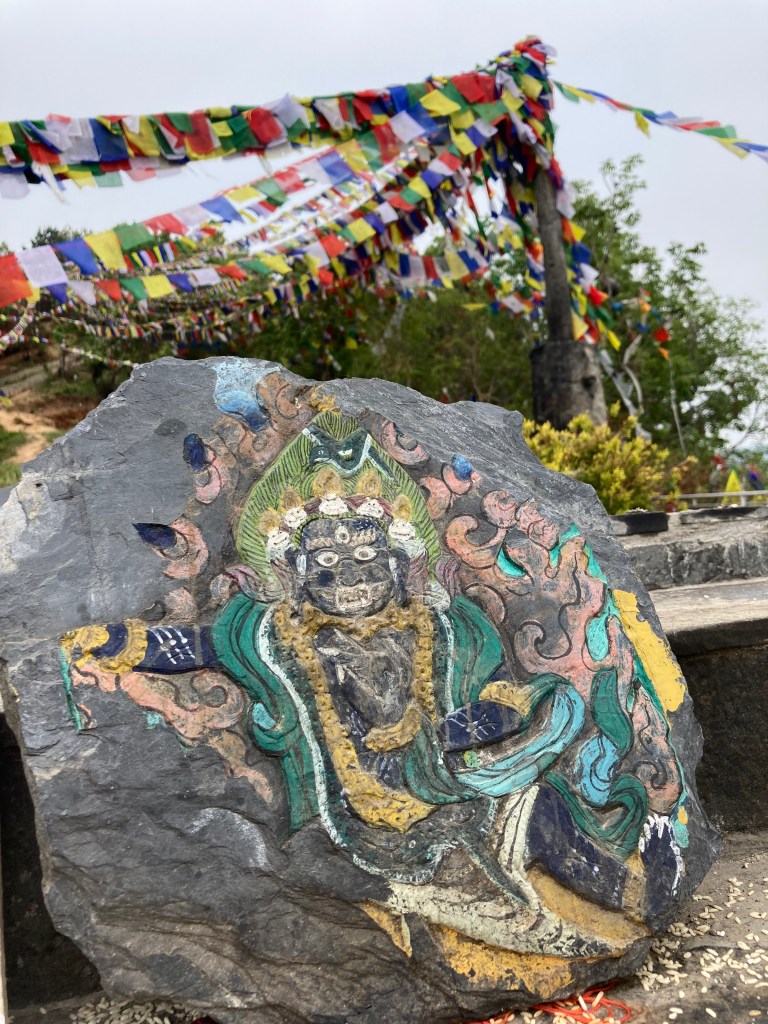
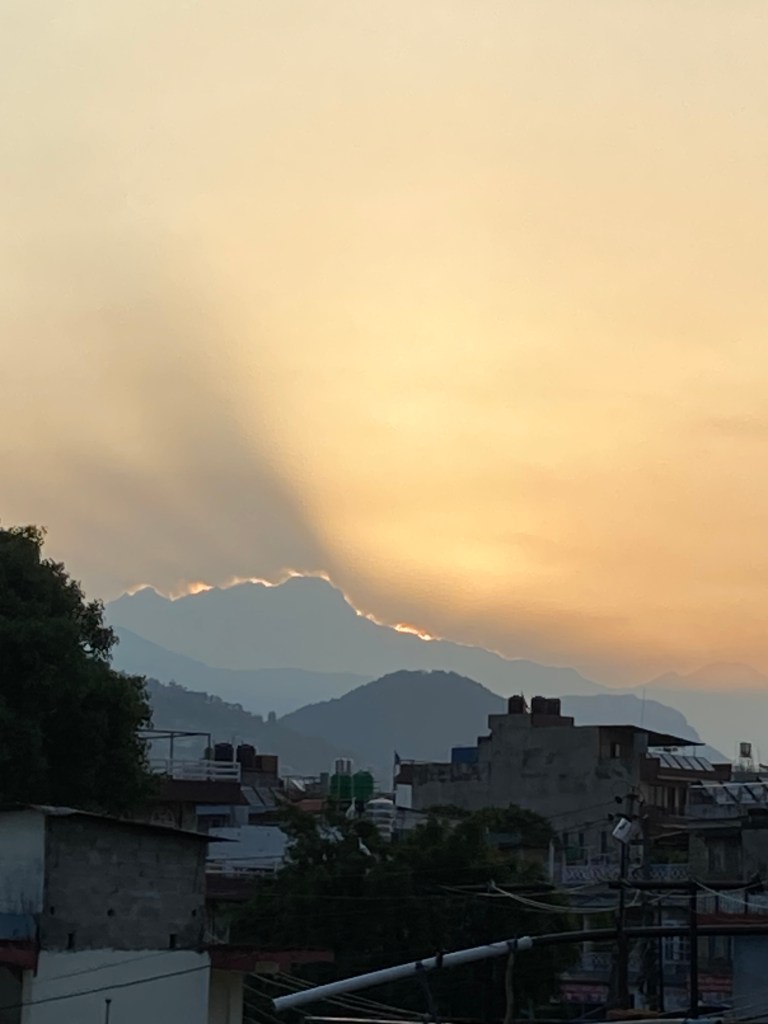
Pokhara also comes with a gift I could never have imagined or anticipated: a room in an apartment with a balcony and Himalaya views. It takes several weeks before the rains clear the sky enough to see them and, when they appear, their golden morning halo is worth each day in wait. I share the apartment with the elderly Kashmiri man who, with his wife, hosted me in SriNagar after snow trekking in Aru valley; he has a shop in Pokhara and all he asks in return is that I attend to customers on Fridays while he goes to Mosque.

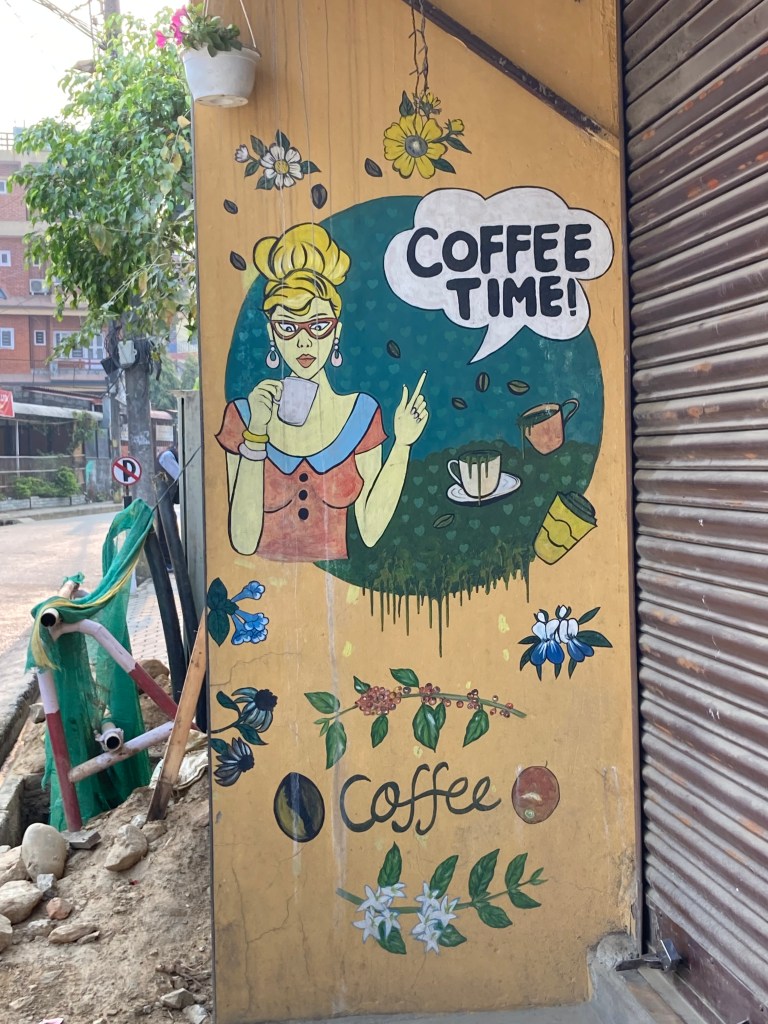
Whilst most people in Pokhara troll the main streets and the lakeside for dopamine hits in the form of fast food, ganja, liquor, shiny plastic trinkets and karaoke, the beautiful duality is that those I judge are also the ones who sleep in. I seek the sanctuary of the peace that descends in the early mornings when I go for my runs, my walks, my solitary yoga, and general contemplation. It’s the time of day when I am able to notice the things that matter … like superb coffee, tranquil vibes and friendly strangers … kindness and beauty also overflow here.

“The word peccadillo, which means a ‘small sin’, comes from pecus, which means ‘defective foot’, a foot that is incapable of walking a road. The way to correct the peccadillo is always to walk forward, adapting oneself to new situations and receiving in return all of the thousands of blessings life generously offers to those who seek them.“ ~  Paulo Coelho, The Pilgrimage

And, as in The Pilgrimage, I too walk the path of generous blessings … whilst my shadow confronts me in the form of a black dog who snarls at me on morning runs and rips to shreds the stick I use to defend myself. With the crazy love affair I instantly develop with duality, the only way I can find harmony is to follow my compulsion and get out of the city only days after my arrival. Pokhara is just the foreplay; to experience the orgasm, there are literal mountains I must climb. 

As the Quintessential Pioneer, Explorer and Adventurer, I am usually questing at speed ahead of others … getting lost to find my way, and generally moving through landscapes with determination, strength and courage. So choosing to take a guide is not easy. We walk together to the permit office and after just those few kilometers I know we will travel well together. Ten days, I say to Tikka, and we can decide if we want to go further after that.

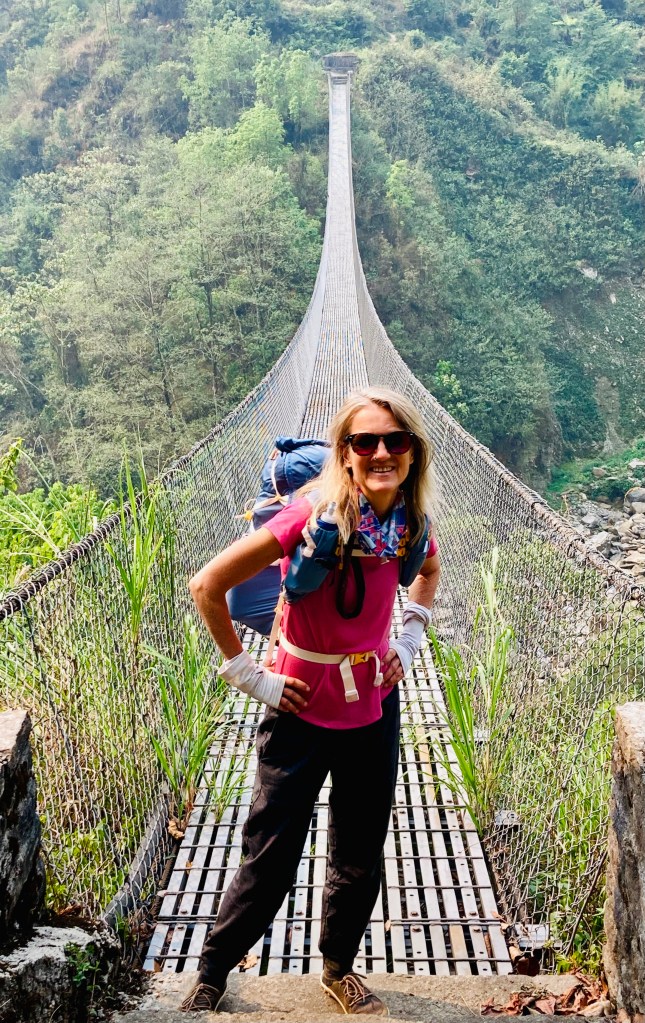
I last trekked in Nepal shortly after America erroneously declared war on Iraq. I have flashbacks to the person I was trekking the then 21-day Annapurna Circuit 23 years ago, fresh out of Barclays Capital with boots I had worn only the once in the High Street adventure store, carrying my 13kg Macpac (which has subsequently done several local trails and Camino de Santiago routes), crawling across suspension bridges at first and then acclimatizing to fearless scrambling across landslides. No smart phone, no Google Maps … no AllTrails or Komoot … only something printed off the relatively new Internet called the YetiGuide, pinned to my pack in a ZipLoc bag. If we got lost, we didn’t know it, because we were always somewhere and there was always a village tap to wash at, a hot dal soup, and a floor to sleep on. Each day just another day on the mountains, we walked in bliss of our youthful ignorance. It’s impossible to know the landscape before walking the territory so the gift is always in letting go of having to know the way.

It feels like having a guide is a betrayal to my independence … and yet somewhat reassuring to be able to follow for a change; to learn that he too follows no maps besides his own instinct and intuition, finding new pathways where new roads have cut away the old trails … that he too is sometimes lost without being lost. The first day or two exposes some resistance to the mecahnics of the trekking: recalibration around not needing to check that Tikka is ok; acceptance of his checking that I am ok; allowing him to carry my extra water bottle; submitting to his carrying all my vegan snacks, and feeling comfortable with his managing nightly arrangements for a free bed in teahouses of people he knows. It just takes me a few days to trust to let go of the needing to know; to sink into the moment-tomoment step-by-step and breath-by-beautiful-breath.

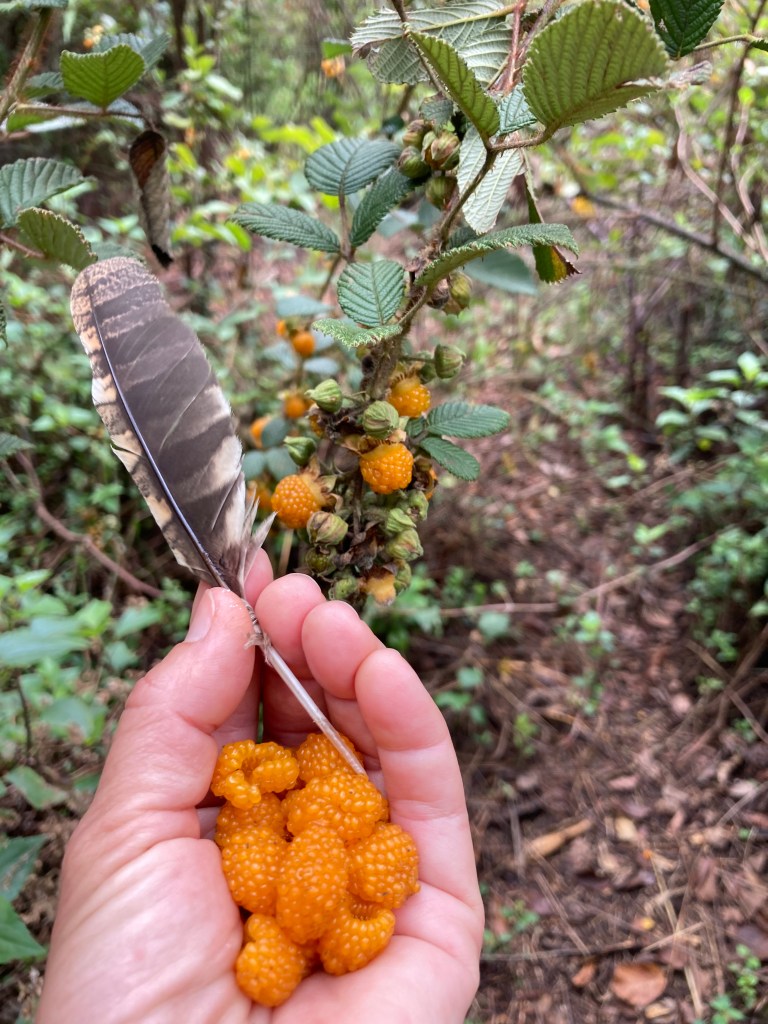
I am a wilderness guide who is also capable of being guided. Slow and steady the leader becomes the led. But slow and steady doesn’t always work for me. I overtake and usurp the leader, transforming him into the led. A potential power struggle becomes a game and then a comfortable rhythm as we mostly walk in silence with occassional fountains of inspiration at smoking stops (by the time we trekked again, he had quit). We climb relentless stairs for hours and days, get drenched in a thunderstorm, dry ourselves in a house that emerges from another dimension, walk in slow motion over literal carpets of rhododendron flowers, cross exposed ridges, push through thickets, gorge on wild berries, engage in fireside therapy with fellow travellers, and wake up to views of mountains that seem like a mirage. Days feel like months as inner landscapes of alchemically putrefying DNA beneath dirty hair and dehydrated skin becomes woven into my being as rapidly as the outer landscape changes. Some day—perhaps in another 23 years—I will have integrated the gavitas of this passage through the mighty Himalaya and grow the capacity to express fully the impact it has had. Not now. 

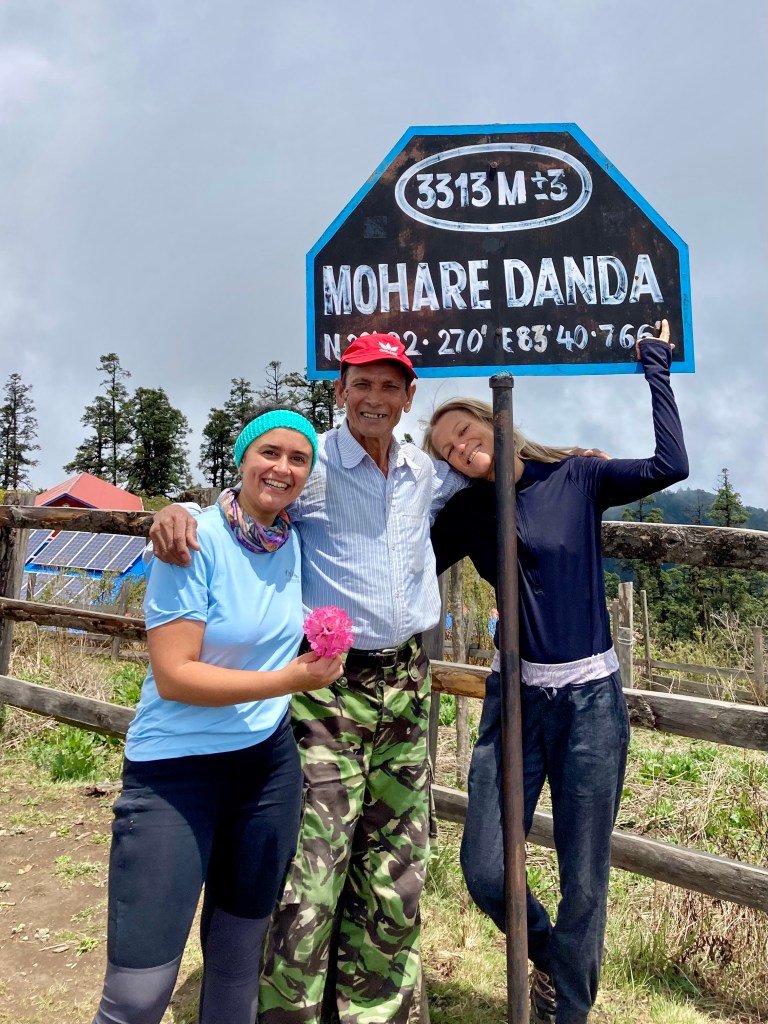
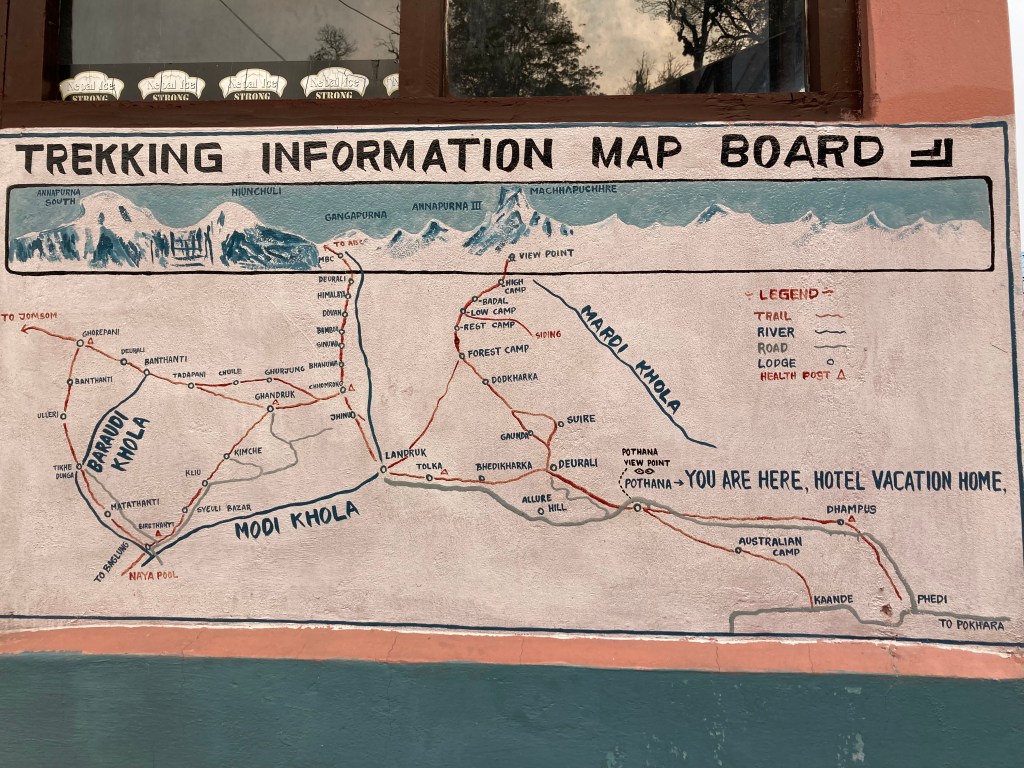
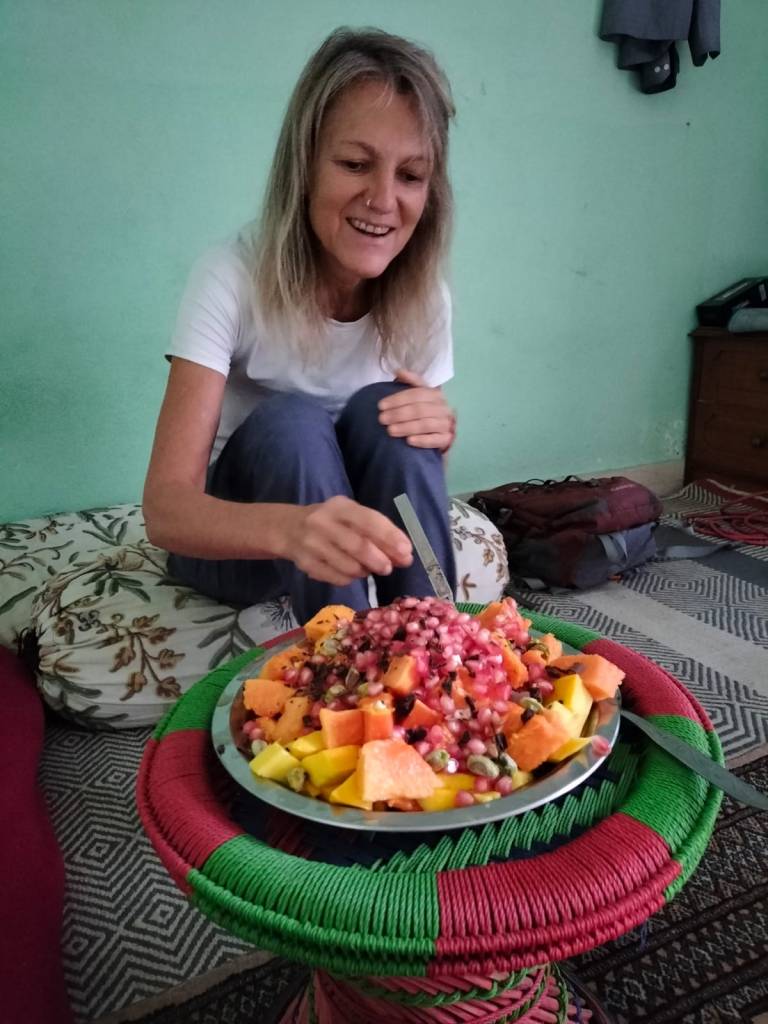
Pokhara becomes my base camp for over a month as I head off on explorations from there. A 10-day trek combining Panchase, Mardi Himal Base Camp at 4,500m, and several villages—including Lwang and Dhampus—flows into a week overlooking Begnas Lake at the tranquil Mountain View Eco Farm, and a return to Pokhara to meet a Spaniard I met at Low Camp. This flows into a 6-day trek to Mohare Danda at 3,500m, a trek to the Peace Pagoda, and a bad judgement call hiking to a homestay in Sarangkot for two nights. Each time I leave the city I settle, and each time I return I instantly vibrate at the frequency of fresh-brewed coffee, slow roasted cashews, perfumed fruits and Amul dark chocolate. I find I can no longer walk anywhere without confronting intense overstimulation. I duck into Disney Land several times to escape the vicious city dogs and slip dimensions into my Xanadu days, lacing up white skates—circa 1980—and whirling around the rollerskate rink. Courses in sound bowl therapy and Thai Massage in the city keep me away from zombie shopping and dopamine eating. And when I find myself resonating more with the latter, I make the decision to leave for good. It’s way too easy to sink into the familiar comforts of consumerism.

I have travelled well since then: back to the Mountain View Eco Farm at Begnas Lake where a storm swept through snapping massive trees and displacing anything not tied down; I have found hiking trails and cricket games from the hilltop heritage town of Bandipur; I have spent a week adventuring in the forested Pharping Dollu enchanted by the multiple temples, monasteries and sacred caves, and I have explored every square inch of the ancient and magical city of Bhaktipur.

I discard cells and possessions as I go; I lighten my load of attachments as a practice towards full renunciation. The less I have the more I am. The inner glamour girl is dead and the embarrassing number of little black dresses and designer shoes she clings to in Cape Town must go too. Born with fists tightly clenched, we ultimately all die with palms wide open. And in between, everything gets rewired from earth to ether … body and spirit … as I move across the landscapes that remake my map. I must integrate now before I can weave these threads and new narratives.

This is my current territory and new reality. This is my handmade life.

(See my Instagram profile for more places and pictures of this epic adventure).

Twenty Two: Grazing on Garlands

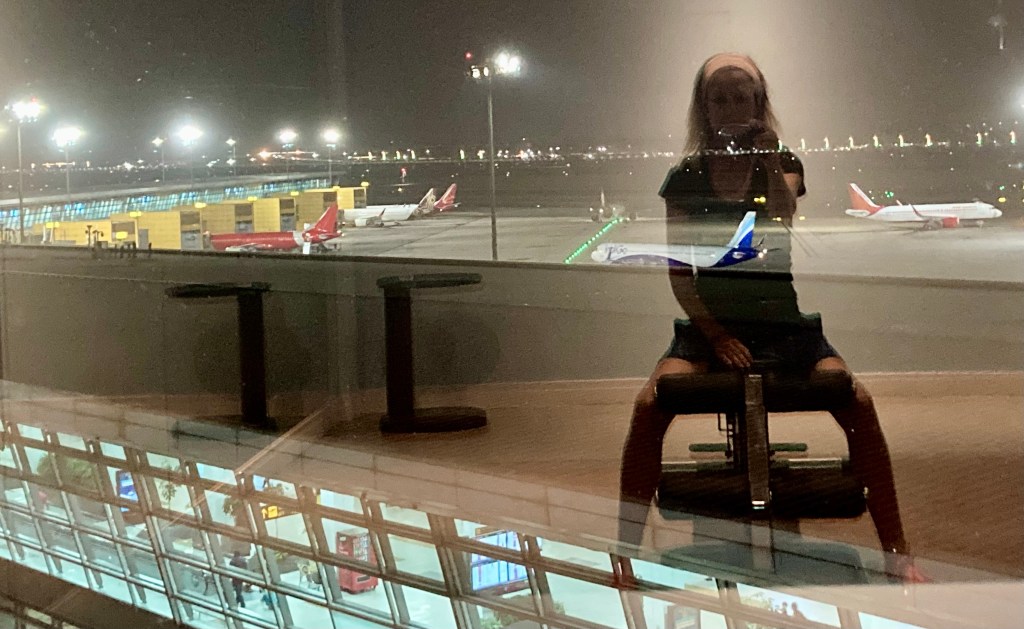
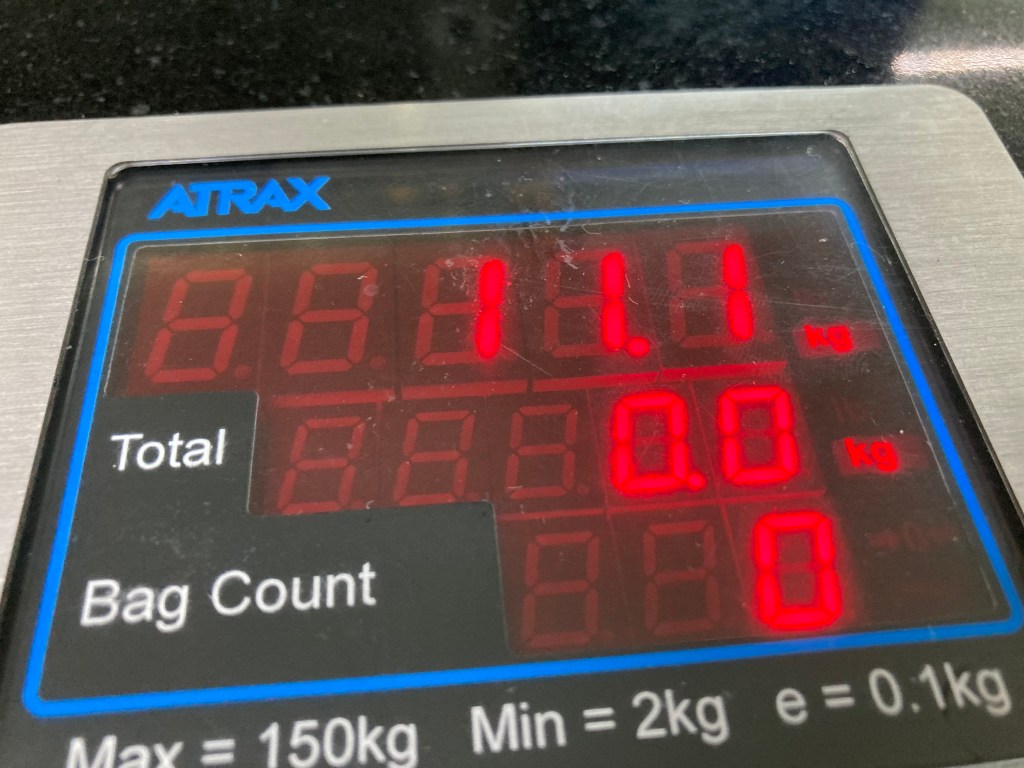
The calendar date is 11 April. The tiniest sliver of new moon glows saffron light from the sun. Eid Mubarak, it harkens. Navratri too. I check out of room 111 at the deluxe Delhi Terminal 3 hotel to check in to IndiGo flight 1155. It’s 11.11am as I hoist my bags onto the scale. My second bag weighs in at 11.1kg. I don’t know. But I understand. I can’t explain it … it is just so. Airports and aeroplanes are facades that make portals more manageable … more believable … less woo-woo. There’s absolutely nothing woo-woo, or comforting, about Delhi airport as the multiple security checks, without fail, leave my hand luggage spewed all over metal counters, where gloved hands perform surgery and extract seemingly innocuous objects from the bowels of my bags. ‘Yes, that’s a pen in my notebook’, ‘No, I don’t have a sharpener in my pencil case’, ‘A powerbank, yes, those are the cables for my laptop … uh-huh, a headtorch’. … duh (under my breath) … ‘Nope, I don’t have any lighter or matches’. ‘I don’t smoke,’ I thrown in for good measure. I get a visible sigh in response as he indicates for me to move on while I contemplate how I manipulated so much stuff into that bag in the first place.

There is that quintessential pre-arrival moment on the aeroplane when everyone starts shifting in their seats, fondling phones, craning necks and bobbing heads, ducking and elongating towards the windows … first this side and then that side, eager to find a gap. Clicking buttons and clicking tongues as the people in the window seats claim their entitlement to a full view of the kilometers-high mountains we begin to descend into. It’s terrific and terrifying.

Nepal is a country that is a slice of land holding most of the world’s highest mountain peaks … sandwiched by India and Tibet, now China, it has nowhere to go but skyward. In terms of surface area, if flattened it would be massive … bigger than the whole US of A in fact. The sight of the fluttering Nepalese flag mimics the mountain peaks with its double pointed triangle. Peaks and valleys make the country as much as they make the person. The quintessential Nepali Dhaka Topi mimics this too.

Same, same, but different echoes from 23 years ago. The name of a coffee shop I wanted to open. A parallel life. And here I am. Exactly where I always am. Draped in a garland of marigolds. The Nepalese Namaste affords everyone divinity in every greeting and is reflected in Well-Come signs everywhere with the hallmark symbol of Nepal: an outline of the bowed head of a woman, eyes downcast with hands in prayer position. This Kathmandu airport arrival is everything the Delhi departure was not. Reverence is a religion. Caressing the marigolds, I beam through the portal to Nic as a 6-year-old traveller in India as he grazed on the abundant marigolds at temples and celebrations and imagine him grazing on this garland. I miss him. And I feel hungry. But the expiry date on the bag of nuts is January 2082. I am suspicious.

To reinforce this time travel, I am told it’s New Year in Nepal in a few days. It will be 2081. Nepal is also an average of 15 minutes ahead of India, which is 3,5 hours ahead of South Africa. People’s birthdays don’t occur on the same date each year but on the day of their birth month when the moon is in the same phase as it was when they were born. My birthday in Nepal is not the 14th but the 27th of June this year—waxing gibbous 66% illumination according to moongiant.com. How many dimensions do I now straddle? My brain fires synapses looking for something familiar. A dog crosses at a zebra crossing—it’s black and white … chameleon identity crisis. The familiar can be dangerous though. It negates anything outside of my objective reality and offers no stretch into growth points of uncomfortable lack of knowing what I am looking at.

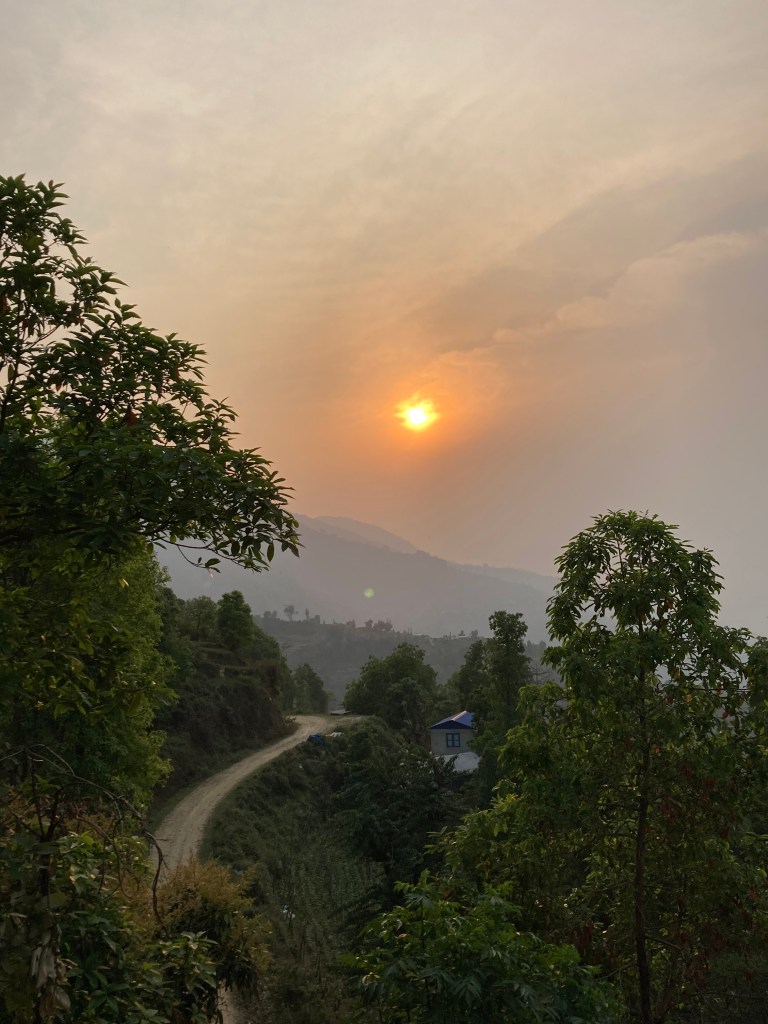
The sun matches my marigold garland; hazy orange suspended in smoggy sky. Recovering from being eclipsed—ego wounded. Three months ago I arrived in India from SriLanka to the same saffron orb between palms. Now it peeks between chaotic buildings and unfathomable wiring. Glitching like my brain. Trying to pull back the veils of disorder to investigate and discover what lurks behind … what awaits the blooming. A bald nun on a motorbike—a future trajectory beckons. ‘Get thee to a nunnery,’ said Shakespeare. I will one day comply. Everything is a possibility; a potential for recalibration and transmutation. My apprehensive inner electrician awaits the next instalment.

Trusting someone with my safe passage, I am teleported into a valley at night. Less than 30km, it takes many hours. I can’t find my bearings in the dark on a mountain pass. I feel trapped in time and space. Pass and passage come from pace, which comes from stretch, something I am unable to do. The passage is rough and potholed. The driver shouts on the phone while he paces. Stuck! Lost? My birthing is stalled and my arrival gets misaligned.

People often ask why I need to plan. It’s so I can give up the planning. It’s my dichotomy. I have to know where I’m going next so that I can choose not to go. I need to know I have a choice (just the one) to protect me from getting stuck where I am. So when we find the place I plan to stay for six weeks to volunteer, the reality becomes somewhat different as I recognise my patterns of usually want to leave the moment I arrive anywhere. I try and blame the new moon but it is aloof in its dismissal of my hollow accusation. The planets can’t be blamed either. It’s only me. Edgy and wanting to flee, it is only in establishing an exit strategy that I can yield to where I am.

Since the external is always a reflection of the internal, I work until my fingers blister and my soul goes awry with the next push out the birth canal. I take on a fruit fast and call a friend in Pokhara. He sends a car to rescue me … from nothing more than myself. I lasted seven days in purgatory … and that’s ok. I acknowledge that this is also a guide to show me my way and there is no mistake in the making of such.

Life is full of answers and this is only one question.

“How will you go about finding that thing the nature of which is totally unknown to you?” Meno