The 5 Symbols of the Camino de Santiago, Part Five: The Scallop Shell

Symbolically the shell is from the ocean and is linked to Venus (self love). It is the so-called medal at the end of the journey once the shore is met and one is able to baptise oneself in the salt water and become new once more—like a baby, and with unconditional love for self.

The way it ties together the network of support is that its image is used as way markers along the route, marking the way through landlocked villages and cities in the hopes of—in days or weeks or months time—the pilgrim will reach the end … which is also the beginning.

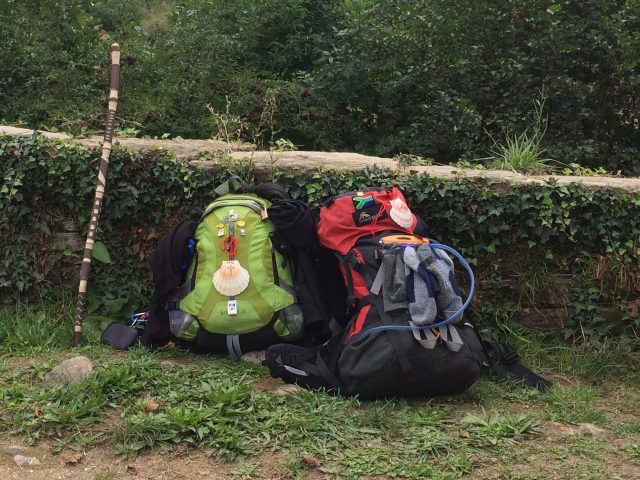
It is not only an inner and outer totem of the achievement of the completion of this particular pilgrimage, it also denotes an opening of the heart and a vessel from which to gather water to drink or anoint oneself. It is also used to ask for donations of food and money.

Sometimes building self kindness can be through random acts of kindness to others. Showing someone else the way can be a guide for self awareness and more adept self trust, self love and self guidance. The notion of offering a helping hand draws attention to the focus on the work I do with my hands and how that reflects on how to give—but not too much of myself so as to not become depleted—and, with the same open hand, to receive what I need from others.

The lines on the shell are known to represent the different routes taken by the pilgrims so, having this as a source, we can trace our different narratives with the outlook that there are many pathways to the same destination and the goal is in the experience itself. Being open and aware to the needs of others is the beginning of a journey home to self.

Questions to ask yourself:

  • How did I stay open and flexible to changes in the direction my day took?
  • What are the inner signals of courage I can pay more attention to?
  • How did I engage with and harmonise giving and receiving?

The end of one journey is always only the beginning of something else so there can never be any expectation of finality. Life is only what you can hold in the Scallop Shell.

On this pilgrimage, because I am walking to raise awareness for mental health and will be intentionally working with people who approach me for coaching, meditation, therapies etc, I will hang a donation box from my backpack with a QR code that pilgrims can scan to access my socials, the work I do and the cause I am walking for. This is aligned to the scallop shell which can also be used as a begging bowl and I am doing this as a way to break down my ego as I open myself to receiving donations from strangers like a nun. 

You can follow, support and share my Walking for Mental Health fundraising campaign on BackaBuddy. All my socials can be found on LinkTree.

The 5 Symbols of the Camino de Santiago, Part Four: The Bandage

Joseph Campbell said, “Follow your bliss”. Pilgrims follow their bliss/ters.

On no past Camino de Santiago or long-distance local hike have I had to deal with blisters. The only trek I suffered from blisters was in 2001 on the Annapurna Circuit (Nepal) when I walked in leather boots I took out of their box to pack in my backpack … I didn’t walk in them once before boarding the plane to walk for 21 days across and over the Himalaya at 5,400m altitude.

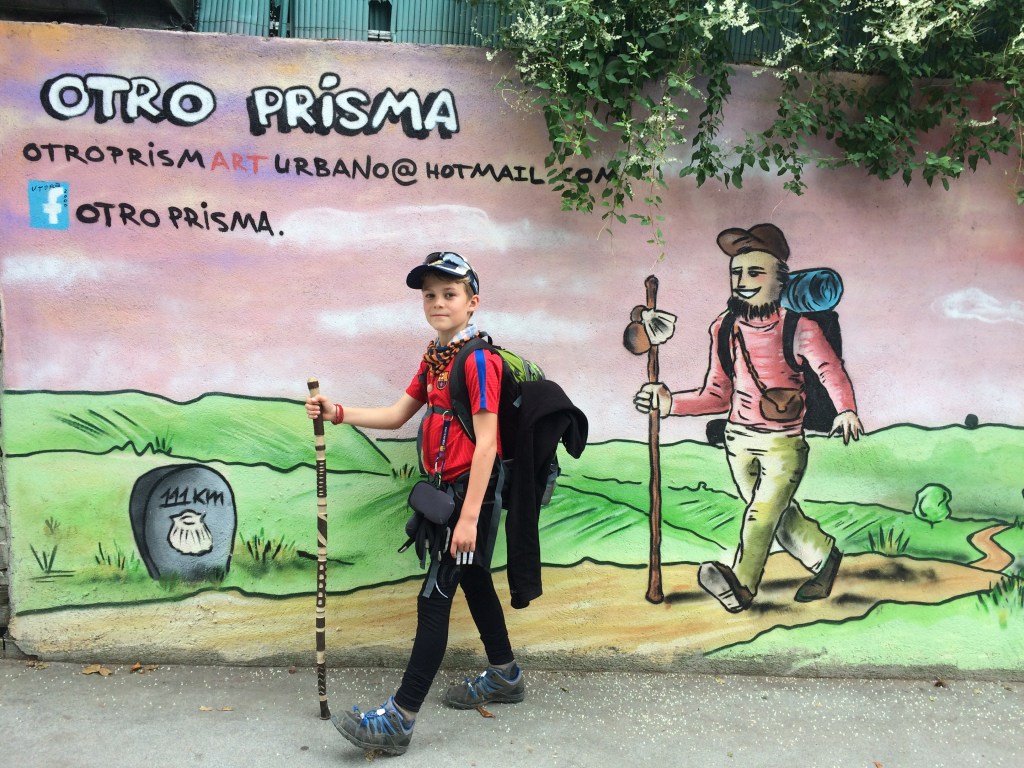
Symbolically, my life in 2001 was plagued with abrasions that caused more pain than pearls and by 2016, my first Camino of 250km with my then 11-year-old son, I had recognised and was acting on my need to nurture my wounds.

Some people diminish their wounds; some deny them; some go into a trauma response and simply obliterate them from memory; some defend their wounds and use their pain as a badge of honour, and some just never quite manage to shine because that would mean giving up on the psychic injuries they have been subjected to.

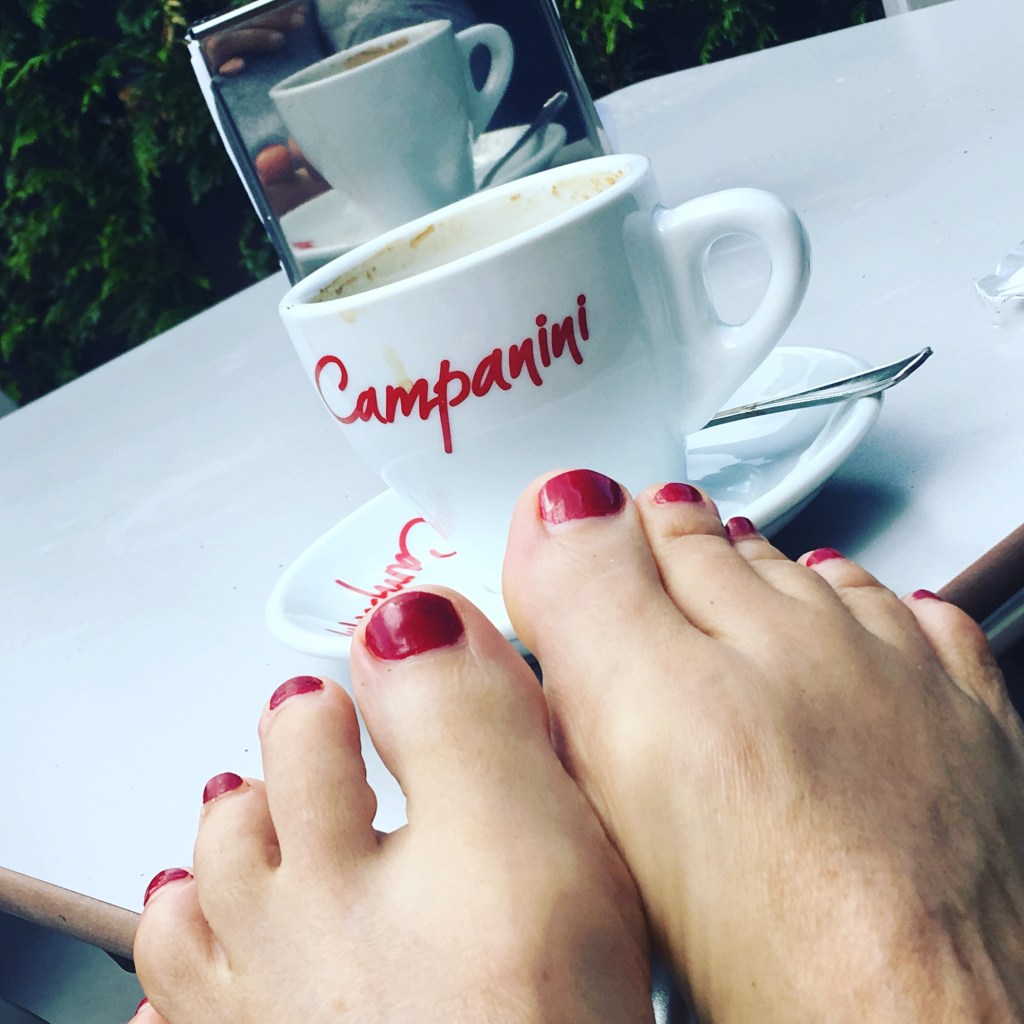
Adapting to different footwear—I now wear Altra trail running shoes for Camino and will be wearing T-Rockets running sandals on some days too—and conditioning my feet long before the journey, as well as every day before and after walking, is a good analogy for building capability and competency to face challenges … and also to recognise where the stone in my shoe is going to hinder my journey and where the stone in my shoe is the grit that the oyster uses to make the pearl.

It is erroneous to bandage and splint healthy body parts, so there is a call for discernment in how one treats one’s wounds, both from the past and those that present themselves currently. Self-care can reprogram one’s emotional, physical, psychic and mental bodies to engage differently with personal injuries or traumas and shift perspective from being overcome by wounds to using them as a pathway to healing.

As I walk this journey from next week, for Mental Health I will be intentionally working with fellow pilgrims who approach me with specific needs around grief, loss, trauma and dis-ease and I am cognisant of needing to be discerning in how much self nurturing and self supporting I must do in order to be able to support others on their unique walk to wellness.

We are not here to be perfect, we are here to heal. And the first part of any healing process is to recognise the wound as a symbol of healing rather than as an obstacle in its way. It’s important to not get too attached to the strapping and then fail to acknowledge that the wound is no longer there. Struggle can be used as a tool to justify one’s actions or one’s suffering and to eliminate the need to step up and show up. A wound isn’t a life sentence and a bandage isn’t a ticket to victimhood. Letting go of the identity of injury can be empowering and can create the space for taking on the responsibility of stepping fully into one’s essential self.

Take care on the journey by training well in order to diminish the risk of injury and by also preparing well by carrying a first aid kit.

Questions to ask yourself:

  • How do I grieve whilst supporting others through their struggles without comparison?
  • How do I create discernment between compassion and a bleeding heart?
  • How do I bandage the internal wounds that hurt more than anything that bleeds?
  • How do I relate to past wounds, injuries and traumas on an emotional, physical and mental level?

You can follow, support and share my Walking for Mental Health fundraising campaign on BackaBuddy. All my socials can be found on LinkTree.

The 5 Symbols of the Camino de Santiago, Part Three: The Yellow Arrow

It may look like the same route as the hundreds of thousands of pilgrims before you yet it is different for your walking it. A pilgrim’s unique footprints make for a unique pilgrimage. 

The Yellow Arrow is a sign of reassurance that one is following one of the routes on the pilgrim’s way and is an iconic symbol of direction in one’s life as well as ancestral direction and rites of passage—pointing out A way which is different to THE way. 

When finding and following these markers it’s a reminder to honour those who have come before. There is a ritual to walking a path that many have taken before, honouring them for carving the way and then honouring oneself for creating one’s own journey from the way. There are many paths leading individuals back home to themselves.

A well-trodden path is still the path untaken until one actually takes it … and then one gets to make it one’s own. It is important to get lost in order to find my way and there is a particular practice of non-judgemental observation that comes with the acceptance of this. I feel it’s important to find myself in a place so unfamiliar that I am challenged to work out how to come back to myself or to accept the new place in which I find myself.

Every part of the entire universe is already right here in this one moment … this one step. There is no manifestation magic in life; it’s all about showing up and placing each foot down with attention and intention. In alchemy it is the third stage in the process, Citrinitas, which is the stage of education before Rubedo, the stage of transformation.

The present moment is your refuge, and this is your home … each footfall brings you back to your self and each self that footfall brings you to is changed because of the footfall. Each contour is as unique as the contours on each individual’s thumbprint; each arrow perceived as just a subtly different shade of yellow; each vista viewed with new eyes; each drop of dew a different prism of light. 

Stepping into each moment builds awareness of what’s in the way, where the path is leading, how open you are to your intuitive GPS, when to follow outside signs or inner cues, when to change direction etc. Trust in self appears in the showing up without knowing where the path goes but recognising that no matter where it goes it is going somewhere and it’s ok to adapt along the way. It’s impossible to be ready for every eventuality before a journey but it’s possible to be prepared to be resilient enough to figure it out on the way. To be able to flex into the curves and detours of any journey is a skill we can develop through recognising that there are over seven billion unique humans and, therefore, over seven billion unique paths.

Questions to ask yourself:

  • Where did I lose my way?
  • How was I able to find my way again, find a new way, or ask someone to guide me?
  • In the moments of getting lost how did you recalibrate to a new way by asking for guidance?

You can follow, support and share my Walking for Mental Health fundraising campaign on BackaBuddy. All my socials can be found on LinkTree.

The 5 Symbols of the Camino de Santiago, Part Two: The Walking Stick

The Walking Stick is a symbol of those people in one’s life who assist in upliftment, encouragement and forward momentum. Having an emotional, physical and spiritual staff to lean on can help traverse tricky terrain.

I don’t walk with poles or a walking stick—in fact the few times I have used someone’s for a difficult crossing or steep downhill, I have fallen. This indicates to me that I need to become more familiar with asking for support. My innate tendency is to always be self supporting and to hold others up. This can be to my detriment if I can’t equally find the people and resources to support me in supporting others.

A Walking Stick can be seen in the negative light of a crutch and using one can be seen to highlight one’s disabilities. It is, therefore, imperative to give this an archetypal symbology that encourages its use. The sense of outreach in difficult times is so key to reducing suffering and restoring well-being. 

This current campaign to walk 1,000km to raise awareness for mental health and suicide prevention made me extremely vulnerable in the asking for support and extremely disappointed. My lessons around support are to lean in only when the support is actually there and being mindful of expectations of it, without using the lack of people believing in me to snap back into being 100% self supporting again.

When you carve a walking stick that ultimately provides support for your pilgrimage, it is like an analogy that can translate into the care and love offered to and infused into another human being that ultimately become the food that fuels that individual to be the support you one day may reach out for.

The pilgrim’s Walking Stick is a symbol that young, able-bodied people also make use of this often necessary tool for of support and that there is no stigma attached to utilising it, whether walking 5 or 45 legs of the Pilgrim’s Way. Using a Walking Stick can be a practice of mindfulness and gratitude—a way to honour the self and the body in recognition of its strength and also acceptance of its fallibility.

It holds the intention and reminder that there is always support at hand and it will challenge a different response when either needing to ask for or accept the offer of help from others. I can lean on something/someone temporarily and it’s ok to then lay it down, until needed again, without a) feeling obligated to be enslaved, and b) depending on it always being there.

Questions to ask yourself:

  • What held me back—cognitively, emotionally, somatically—in asking and/or receiving a hand of support today?
  • Who are the people in my community, tribe who are my walking sticks in life and how do I honour these people more by being receptive to their care?

You can follow, support and share my Walking for Mental Health fundraising campaign on BackaBuddy. All my socials can be found on LinkTree.

The 5 Symbols of the Camino de Santiago, Part One: The Backpack

As I embark on my most challenging pilgrimage, 1,000km on the Camino de Santiago in Spain, Walking for Mental Health, I am drawn back to reflect once more on the symbols of The Way that I have previously walked with.

The first symbol is the most important for me as it indicates the strategic part of the planning phase as I consider what to pack … adding and then eliminating … ruminating and deliberating … trying to envisage the climate, the landscape, the skin feel and mostly—perhaps obviously—the weight vs the comfort of choice.

If a backpack is too full, the physical body will be strained over capacity and the mind will be less focused on the path ahead as a consequence of the pain. Carrying an extra weight on one’s shoulders has become normalised and it’s common for people—adults, children, corporates, healers—to be brought to their knees by this weight before asking for support. Equally, the journey can be hindered by too light a pack as a result of not paying enough attention to the necessary items one needs to carry on a journey; this could also indicate a—conscious or unconscious—negation of certain personal needs and basic requirements for comfort and health.

We all tend to accumulate too much, often out of fear and death denial; a habit that is hard to break and one that ultimately results in being unwittingly burdened with more than we can carry. It’s important to see what and who lies beneath the layers we have built around ourselves and the burdens we have chosen to carry, and then to create new habits to do with shedding rather than accumulating.

To strip down on an emotional, physical and mental level takes courage because it shows us our authenticity and the corresponding vulnerabilities. By stripping down I don’t mean full renunciation; I refer to discernment around needs according to values and a slow un-layering in line with each person’s capacity and desire for transformation.

Questions to ask yourself:

  • What am I carrying today that may not be mine and/or what is the impact for me?
  • What can I remove from my backpack, and who, if relevant, can I give it to?
  • What’s essential that I might add or that would be worthwhile adding to my backpack for now?

Observations:

  • Awaken your ability to recognise when, how, where and for whom you may be over-burdening yourself. 
  • Build your capacity to feel into how your whole system is responding to the weight you are—intentionally or unintentionally—carrying on a physical, mental and/or emotional level.
  • Look at what doesn’t need to be there as well as what is potentially missing that will benefit the pilgrimage and ease the long walk.

You can follow, support and share my Walking for Mental Health fundraising campaign on BackaBuddy. All my socials can be found on LinkTree.

Believe yourself into Being

When people believe in you, you start believing in yourself.

I grew up not being believed in — my skills and abilities and also my innate wisdom were overlooked; considered odd — and I consequently learnt from a very young age to abandon myself to fit in and be fed.

I am not a victim to this because I also know the wound is the gift.

So my life’s calling, and my ultimate answering to it, has been to value people and help them heal enough to believe in themselves again.

I have found in life that there are two times where people get abandoned in the type of society we now live in where attention spans are diminished and judgement trumps trust: when at our absolute rock bottom having lost the ability to don the masks of an expected norm, and when in our blissful joy living in alignment with our purpose and meaning.

There are always those champions in life who hold you in support and believe in you at both ends of the spectrum — these are your people; hold onto them … the ones who only hang out in the middle zones only erode the belief in yourself you have worked so hard at regaining.

The loneliest of people aren’t those who have no one around, they are the ones surrounded by people who don’t share values and who expect you to show up in service of who they need you to be.

As Michael Mead says, “The calling keeps calling.”

It is never too late and you are never too old to become who you were born to be. Depression, addiction, anxiety, stress … to name only a few afflictions of this world we live in … are the silent killers that need to be witnessed and brought into the light by those willing to go into the dark.

I have found that when life is so hard I have lost the capacity to help myself, I go buy a meal or a blanket for a homeless person or pay for street people to spend a night in a shelter. This is my medicine—an unwitting and relatively minor altruism and the one that has had the power to keep me going until I believe in myself again.

And then I must dance … because dark and light have to be navigated in equal measure for the psyche to find true harmony.

When asked, ‘Why …?’

When asked why I chose the Camino de Santiago for this mission and to raise awareness for Mental Health in Suicide Prevention month, the answer was clear:

I have walked so many varied paths all my life, always with this libido driving me towards something there … yet not yet visible. There has been this calling, sometimes subtle and sometimes so intense it has brought me to my knees in prostration and frustration. And yet I have walked and walked and walked through injury, bad climate, distress and, most importantly, a deep knowing that there was something I was walking towards.
Raising awareness for mental health; de-stigmatising conversations around suicide, trauma, grief and loss, and educating people with tools and techniques to recalibrate around adverse life events and debilitating emotional distress are what I was unwittingly walking towards on all my paths.
My paths have been in psychology, investment banking, social development, coaching, meditation, mountain guiding, Vedic scriptures, travel and trekking, writing, creating, consulting, healing and helping.
In short, Walking for Mental Health is my very own Camino de Santiago

With two weeks until departure for Spain to walk 1,000km whilst offering my skills, gifts, wisdom and work freely to fellow pilgrims on their own unique paths to their mental, emotional, physical and spiritual goals, I am reaching out once more for support for my campaign, which is almost 50% funded and which still needs over ZAR 20,000 to make it possible.

If you are unable to make a donation, please consider sharing the campaign with those who resonate with my vision and mission and please note that there are donor incentives for those who would like to experience my work.

To contribute to Walking for Mental Health you can click on my BackaBuddy link:
https://backabuddy.co.za/campaign/walking-for-mental-health
or find all my socials, including how to follow my journey on YouTube, by clicking on my LinkTree:
https://linktr.ee/Walking_for_Mental_Health

Being a donor and supporting me to walk my talk means you become part of the journey of support for whomever I coach along the way. You become part of the solution.

Unravelling

People often ask how I got from the 60-hour work week, shackled to a corporate desk in Investment Banking, to the fluidity and flexibility of a multi-faceted therapist, coach and guide.

In surrender, I reply … on my knees, with broken heart and shattered dreams. And not just the once.

For decades I did what I was meant to do to fit the societal construct of a productive adult contributing to a broken world. Nobody had versed me in the art of creative choices, the trust in intuition, and the capacity to follow my soul in life or in love.

We often think doing the work, the training, the emotional labour, means that we will be more resilient at times of challenge. But it’s often not true.

It is my role to guide you through the crises, that will ultimately bring growth and development, rather than numb you with more layers of bullshit just to temporarily help you ‘fit in’ with the essentially dysfunctional society in which you exist. Existential distress does not equate to mental disease; it means there is an inner tension pushing you through another birthing into a new way of existence. It is a calling to the you who needs to unravel in order to be rewoven.

Through the blend of modalities that I show up with in service to your wellbeing, there is an un-layering that occurs to reveal your values and roles, or bring you to a place of balance  from where you can better develop those values in order to find belonging through authenticity rather than through merely adopting the values of those around you and ultimately adapting to a system that doesn’t resonate with your true need to find meaning.

It is important to find the core strength to stand out rather than fit in; to add rather than adapt; to live your own life rather than exist in others’. You don’t come into the world; you come out of it.

As a nomad on life’s landscapes I have developed the skills and wisdom to guide you to a deep exploration of who you are, what your gifts are and how to live your truth and purpose into the world with curiosity and compassion.

People call me courageous because of how I approach life. The word courage comes from cor meaning heart so, yes, this is a word I live into the world … one day at a time.

I blend my studies with my experience and I bring a deep wisdom, tempered with ignorance, into the world.

I invite you to explore your inner world like a true adventurer.

I am an energetic accumulation of my life force, my experiences, my research, my studies, my connections and my family tree; I am you in me and I am me in you.

Symbols of Walking the Camino de Santiago for Mental Health on BackaBuddy

As I plan the next Pilgrimage, I reflect on how I got to this point and how my embarking on this journey to raise awareness for Mental Health has both negatively and positively impacted those in my circle, my community and my life in general … and the corresponding impact others’ attitudes, words and actions have had on me.

Depression has become that kind of familiar place that I am now able to visit—albeit unintentionally—and, despite the mostly unbearable discomfort and burning desperation to either just die or get out, I can sit in the stench of it and allow it to show me the neon signs of my next destination.

Sometimes I simply want the signs to say, JUMP! or TAKE A VERY LONG WALK INTO THE OCEAN! Sometimes I don’t want to notice the EXIT sign because life outside of this black hole can seem too scary compared to this familiar discomfort. Most times, as in this current case, the signs are so glaringly powerful that they kick my ass out of there with no choice but to follow the trajectory they are pointing me to.

When I stopped anaesthetising the discomfort of my dysfunctional marriage with alcohol and sugar 15 years ago, I took to running … and running … and running some more. And when I again chose an abusive relationship that ended in verbal and sexual violation, I walked 450km in Portugal on two separate and consecutive Camino de Santiago routes. 

Sitting in the trenches of this most recent depression, I was booted out only on reaching the point of knowing the only thing that could literally save me was to walk … far … long … intensely and intentionally … and in collaboration with my most pronounced character trait and, consequent greatest value: showing up in service to individuals, communities and to the environment in a manner that allows whatever it is that life is wanting to live through me.

I can inordinately deliberate over choices. Reaching the decision to walk 1,000km across Spain, and subsequently coming to the realisation that I wanted to do it in an altruistic manner, however, happened in less than 24 hours. It took another 24 hours to reach the decision to turn it into a community collaboration by launching a BackaBuddy fundraising campaign to ask for support in order to support.
https://backabuddy.co.za/campaign/walking-for-mental-health

With full transparency and gut-wrenching vulnerability, I have revealed truths about the foundations of my innate need to walk and my motivation around raising awareness for Mental Health whilst guiding others on their own unique walks to wellness. And I have revealed my desire to do this through my existing social media channels, a new YouTube channel and on a crowdfunding platform so that others can ride the karmic wave of altruism and awareness. 
https://linktr.ee/Walking_for_Mental_Health

Asking for help is the most difficult thing for me—it exposes me to the vulnerability of growing up with no support. I may as well be standing stark naked in front of the cathedral for how open my heart is in the asking. This led me to writing about the Symbols of the Camino de Santiago and back to the beginning paragraph which I will elaborate on in another post that will detail each of the most significant (to me) of the symbols and how they have highlighted so rapidly the support, direction and purpose that have come from somewhat unexpected places.

These astounding growth moments in life shake up my prior beliefs, hopes and accidental expectations and fully recalibrate my mind, my heart, my soul and the entirety of my very being into a new stronger holding pattern that weaves a new narrative around the thread … that single piece of fibre … I am left holding, when all else has unravelled.

This is the end. And what I choose to weave—and with whom—is where I begin.

Walking for Mental Health

I have been a quiet activist for most of my life, starting as far back as pre-teen when I thought donating my pocket money would end world hunger.

I have also been a not to quiet activist, getting hate mail when I was feeding hundreds of people made homeless in the settlement in Hout Bay.

I’m not so naive that I expect this campaign or even the work I do to change the world; what I do know though is that if I die a pauper having helped just one person survive the darkest moments of their life then that is a rich life indeed.

What it means to live well means different things to different people. For some it is accumulating money, status and possessions and for others it’s about relinquishing such things. Some people require luxury and some need simplicity and there is no right or wrong. The key is integrity, authenticity and self-reflection on the meaning that is being lived through you and how that motivates you to purposeful living.

For many years I accumulated as much as possible feeling my prior years life as a sensitive activist was washed away by the perception of a waste of time.

My years in investment banking and consulting was like putting a metal cast on a grazed knee—it was the ultimate burden that almost killed me by first breaking the spirit of who I was meant to be in the world.

As I stripped away the layers and left myself exposed to those who couldn’t understand my giving up my feathered nest, I recognised that behind the criticism of many was that longing to also find meaning … and the intense and debilitating fear that often prevents it.

I have shadow boxed with depression and addiction my entire life. A recent confrontation with depression, addiction and dysfunction has helped me address the relationship these have with connection, childhood trauma and hyper vigilance around personal safety, boundary violations and feeling the need to give myself away in order to be accepted … to exist even.

Depression and addiction have deep roots and, although I have done decades of work on my childhood traumas (neglect, abuse, violations, hyper-vigilance and a lack of safety), as well as adult traumas (rape, relational and familial abuse, breakdowns, grief and self harm), I have to be vigilant. Sometimes my only saviour is feet in running shoes on mountain trails. Some call that an escape, others call it an addiction. I call it survival, serenity, self care. Running and hiking have always been my medicine; my means to process and progress on an ever-deepening spiritual path. Writing and story telling are my other elixirs. So, when looking for a passage through this mental health crisis, I recognised the Camino de Santiago as that tool that could save my life.

Grief is not always about losing someone you love, it can also be about losing aspects of self; it can also be mourning the loss of a person still alive and grieving the person you could have been if things had only been different.

My immediate aspiration is to walk 850 to 1,000kms across Spain from 17 Sep to 4 Nov ’25 whilst advocating for Mental Health with the sharing of tools & techniques with fellow pilgrims, to create a new narrative through coaching and story telling. I will also offer craniosacral therapy along the way.
My long term goal is to use the unique combination of my qualifications, wisdom and experience to initiate teenagers from disadvantaged communities into nature therapy (using my years of experience and studies in social development) as well as corporates (using my long history in Investment Banking and Consulting).

“My ugliest parts, when met with mercy, can become my greatest assets.” ~ Frank Ostaseski

My work is not to help people live the kind if life I have chosen to live; it’s to show them that they have their own way and to help them uncover and/or develop the tools that will enable them to find the path that will appear only when they take that very first step. It can be overwhelming deciding (in the head) which of the myriad paths to take until a felt (in the heart) sense is realised.

To support me to support others whilst walking the Camino de Santiago, please click on the link to pledge your support:
https://backabuddy.co.za/campaign/walking-for-mental-health
I offer donor incentives in the form of vouchers for specific minimum donations.

The amount you donate will contribute to my pilgrimage to giving the topic of mental health the bandwidth it needs and supporting me to support others as they too walk to wellness. Together we can remove the stigmas attached to the topic of Mental Health and support people in their times of crisis and healing.

We begin so we can end and we end in order to begin again.
Let’s get people walking their talk to better mental health.

Scan this QR code for my LinkTree,
which contains all the relevant links for you to follow, support and share the campaign
as well as the work I do both here and abroad.