Pokhara—Nepal’s Promised Land—comes with its own unique challenges and blessings. Bars and restaurants take over the Lakeside area with names like Crave and Paradise; there are strip clubs now and a Pokhara Disney Land. Tourists from all over the world consume in a frenzy anything on offer. I pass people on the streets who look like they have just stepped out of a video game and I am offered ganja and ‘a night to remember’ whenever I cross a certain threshold on the main road. Twenty-three years have not been kind.
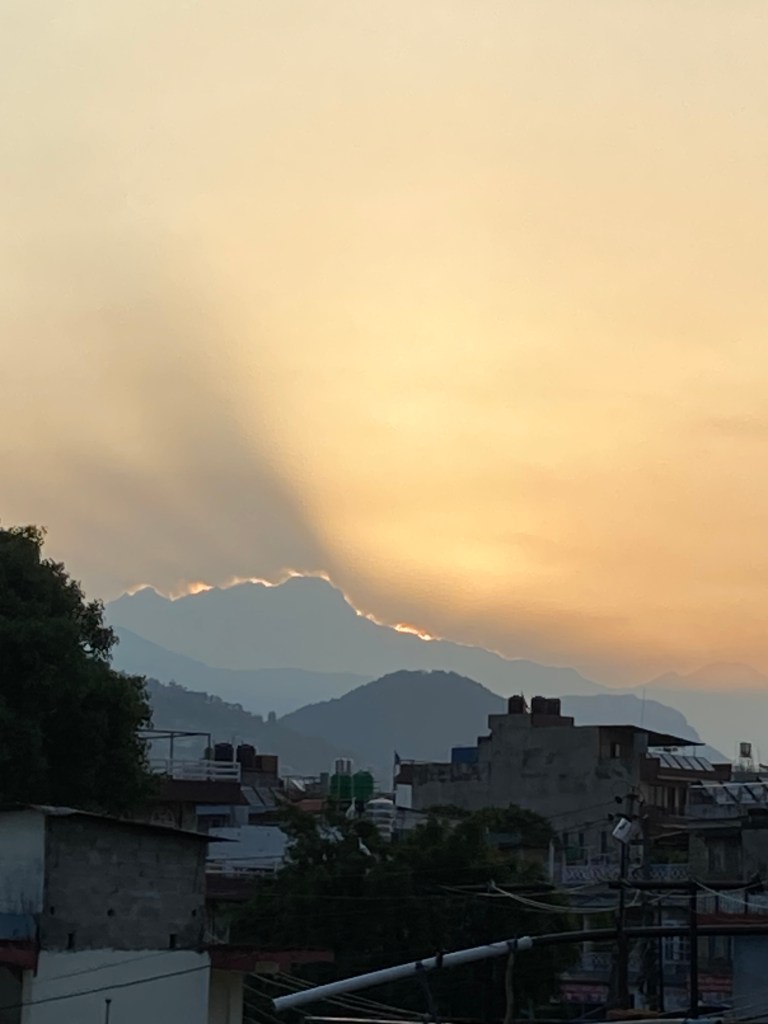
Pokhara also comes with a gift I could never have imagined or anticipated: a room in an apartment with a balcony and Himalaya views. It takes several weeks before the rains clear the sky enough to see them and, when they appear, their golden morning halo is worth each day in wait. I share the apartment with the elderly Kashmiri man who, with his wife, hosted me in SriNagar after snow trekking in Aru valley; he has a shop in Pokhara and all he asks in return is that I attend to customers on Fridays while he goes to Mosque.
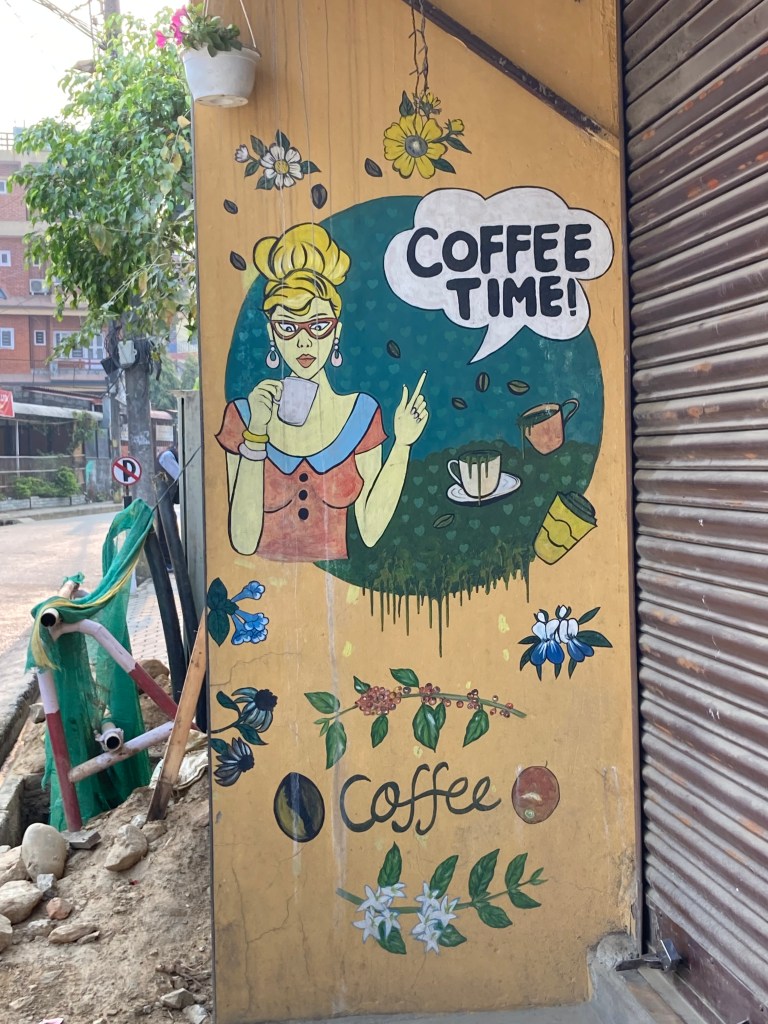
Whilst most people in Pokhara troll the main streets and the lakeside for dopamine hits in the form of fast food, ganja, liquor, shiny plastic trinkets and karaoke, the beautiful duality is that those I judge are also the ones who sleep in. I seek the sanctuary of the peace that descends in the early mornings when I go for my runs, my walks, my solitary yoga, and general contemplation. It’s the time of day when I am able to notice the things that matter … like superb coffee, tranquil vibes and friendly strangers … kindness and beauty also overflow here.
“The word peccadillo, which means a ‘small sin’, comes from pecus, which means ‘defective foot’, a foot that is incapable of walking a road. The way to correct the peccadillo is always to walk forward, adapting oneself to new situations and receiving in return all of the thousands of blessings life generously offers to those who seek them.“ ~ Paulo Coelho, The Pilgrimage
And, as in The Pilgrimage, I too walk the path of generous blessings … whilst my shadow confronts me in the form of a black dog who snarls at me on morning runs and rips to shreds the stick I use to defend myself. With the crazy love affair I instantly develop with duality, the only way I can find harmony is to follow my compulsion and get out of the city only days after my arrival. Pokhara is just the foreplay; to experience the orgasm, there are literal mountains I must climb.
As the Quintessential Pioneer, Explorer and Adventurer, I am usually questing at speed ahead of others … getting lost to find my way, and generally moving through landscapes with determination, strength and courage. So choosing to take a guide is not easy. We walk together to the permit office and after just those few kilometers I know we will travel well together. Ten days, I say to Tikka, and we can decide if we want to go further after that.
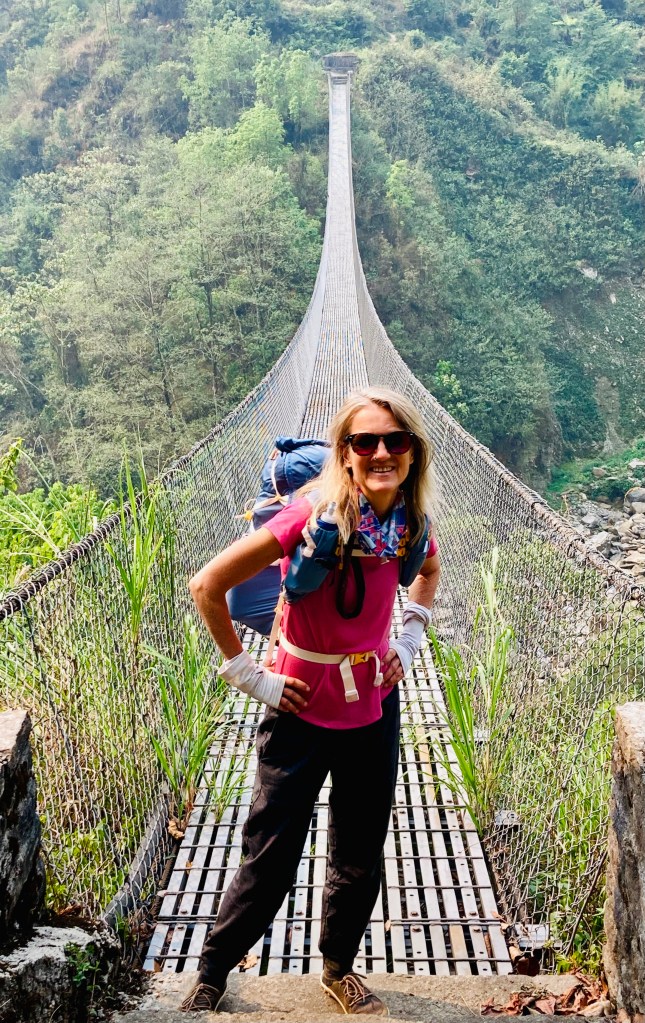
I last trekked in Nepal shortly after America erroneously declared war on Iraq. I have flashbacks to the person I was trekking the then 21-day Annapurna Circuit 23 years ago, fresh out of Barclays Capital with boots I had worn only the once in the High Street adventure store, carrying my 13kg Macpac (which has subsequently done several local trails and Camino de Santiago routes), crawling across suspension bridges at first and then acclimatizing to fearless scrambling across landslides. No smart phone, no Google Maps … no AllTrails or Komoot … only something printed off the relatively new Internet called the YetiGuide, pinned to my pack in a ZipLoc bag. If we got lost, we didn’t know it, because we were always somewhere and there was always a village tap to wash at, a hot dal soup, and a floor to sleep on. Each day just another day on the mountains, we walked in bliss of our youthful ignorance. It’s impossible to know the landscape before walking the territory so the gift is always in letting go of having to know the way.
It feels like having a guide is a betrayal to my independence … and yet somewhat reassuring to be able to follow for a change; to learn that he too follows no maps besides his own instinct and intuition, finding new pathways where new roads have cut away the old trails … that he too is sometimes lost without being lost. The first day or two exposes some resistance to the mecahnics of the trekking: recalibration around not needing to check that Tikka is ok; acceptance of his checking that I am ok; allowing him to carry my extra water bottle; submitting to his carrying all my vegan snacks, and feeling comfortable with his managing nightly arrangements for a free bed in teahouses of people he knows. It just takes me a few days to trust to let go of the needing to know; to sink into the moment-tomoment step-by-step and breath-by-beautiful-breath.
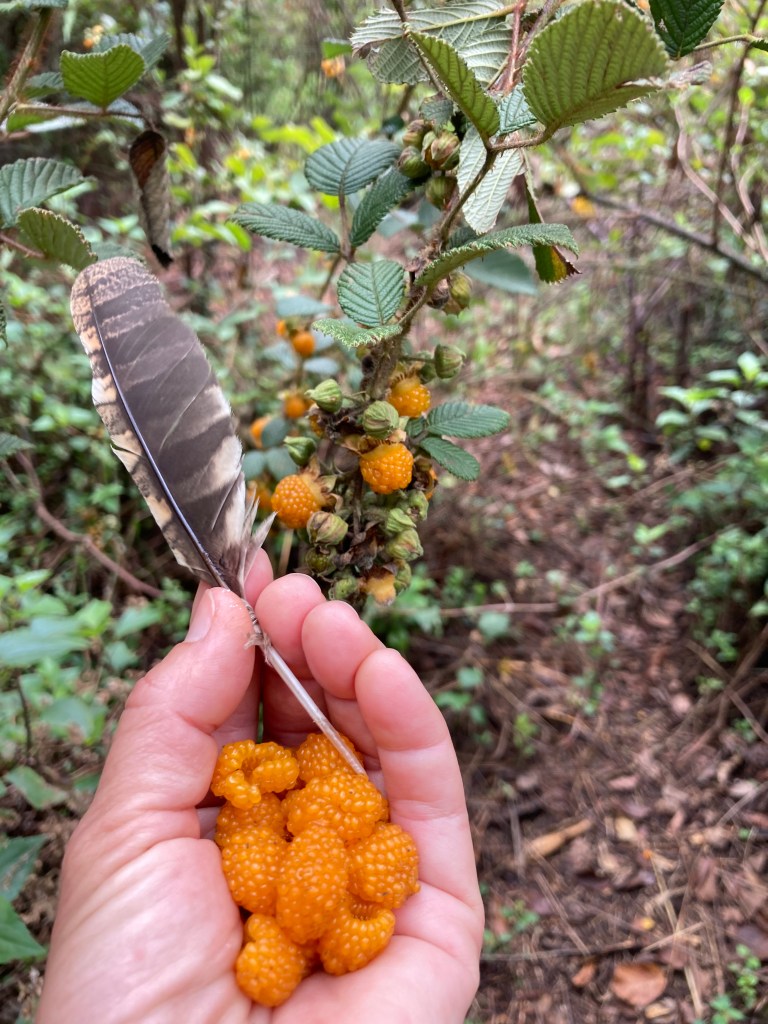
I am a wilderness guide who is also capable of being guided. Slow and steady the leader becomes the led. But slow and steady doesn’t always work for me. I overtake and usurp the leader, transforming him into the led. A potential power struggle becomes a game and then a comfortable rhythm as we mostly walk in silence with occassional fountains of inspiration at smoking stops (by the time we trekked again, he had quit). We climb relentless stairs for hours and days, get drenched in a thunderstorm, dry ourselves in a house that emerges from another dimension, walk in slow motion over literal carpets of rhododendron flowers, cross exposed ridges, push through thickets, gorge on wild berries, engage in fireside therapy with fellow travellers, and wake up to views of mountains that seem like a mirage. Days feel like months as inner landscapes of alchemically putrefying DNA beneath dirty hair and dehydrated skin becomes woven into my being as rapidly as the outer landscape changes. Some day—perhaps in another 23 years—I will have integrated the gavitas of this passage through the mighty Himalaya and grow the capacity to express fully the impact it has had. Not now.
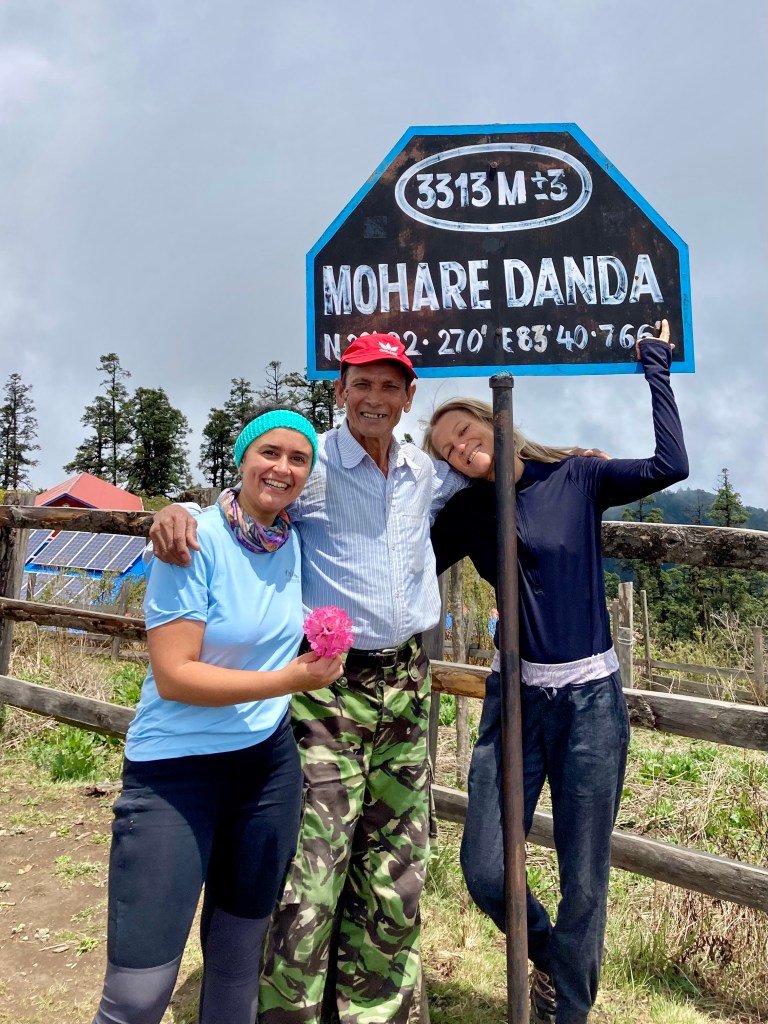
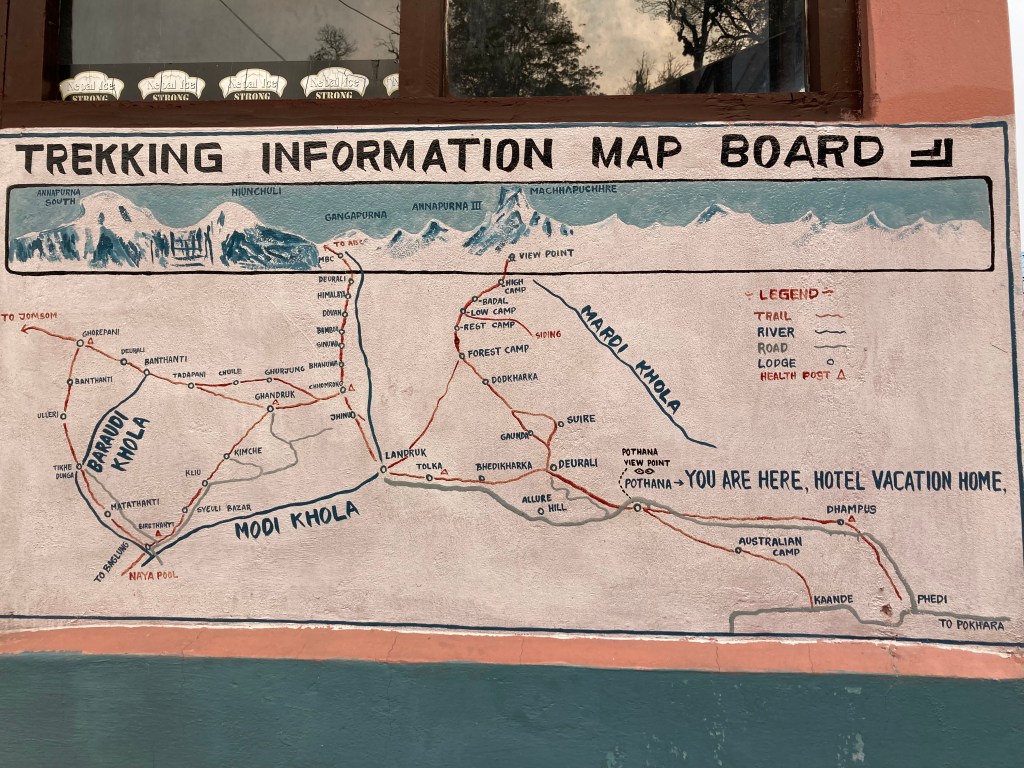
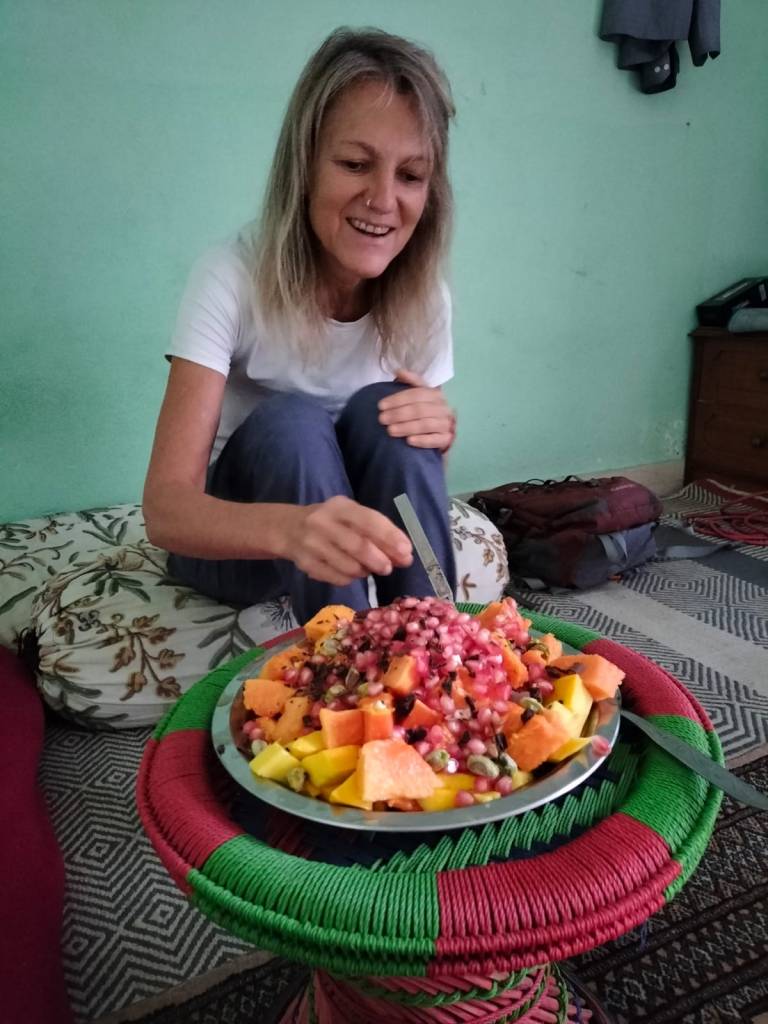
Pokhara becomes my base camp for over a month as I head off on explorations from there. A 10-day trek combining Panchase, Mardi Himal Base Camp at 4,500m, and several villages—including Lwang and Dhampus—flows into a week overlooking Begnas Lake at the tranquil Mountain View Eco Farm, and a return to Pokhara to meet a Spaniard I met at Low Camp. This flows into a 6-day trek to Mohare Danda at 3,500m, a trek to the Peace Pagoda, and a bad judgement call hiking to a homestay in Sarangkot for two nights. Each time I leave the city I settle, and each time I return I instantly vibrate at the frequency of fresh-brewed coffee, slow roasted cashews, perfumed fruits and Amul dark chocolate. I find I can no longer walk anywhere without confronting intense overstimulation. I duck into Disney Land several times to escape the vicious city dogs and slip dimensions into my Xanadu days, lacing up white skates—circa 1980—and whirling around the rollerskate rink. Courses in sound bowl therapy and Thai Massage in the city keep me away from zombie shopping and dopamine eating. And when I find myself resonating more with the latter, I make the decision to leave for good. It’s way too easy to sink into the familiar comforts of consumerism.
I have travelled well since then: back to the Mountain View Eco Farm at Begnas Lake where a storm swept through snapping massive trees and displacing anything not tied down; I have found hiking trails and cricket games from the hilltop heritage town of Bandipur; I have spent a week adventuring in the forested Pharping Dollu enchanted by the multiple temples, monasteries and sacred caves, and I have explored every square inch of the ancient and magical city of Bhaktipur.
I discard cells and possessions as I go; I lighten my load of attachments as a practice towards full renunciation. The less I have the more I am. The inner glamour girl is dead and the embarrassing number of little black dresses and designer shoes she clings to in Cape Town must go too. Born with fists tightly clenched, we ultimately all die with palms wide open. And in between, everything gets rewired from earth to ether … body and spirit … as I move across the landscapes that remake my map. I must integrate now before I can weave these threads and new narratives.
This is my current territory and new reality. This is my handmade life.
(See my Instagram profile for more places and pictures of this epic adventure).












 WELL WORTH BEING