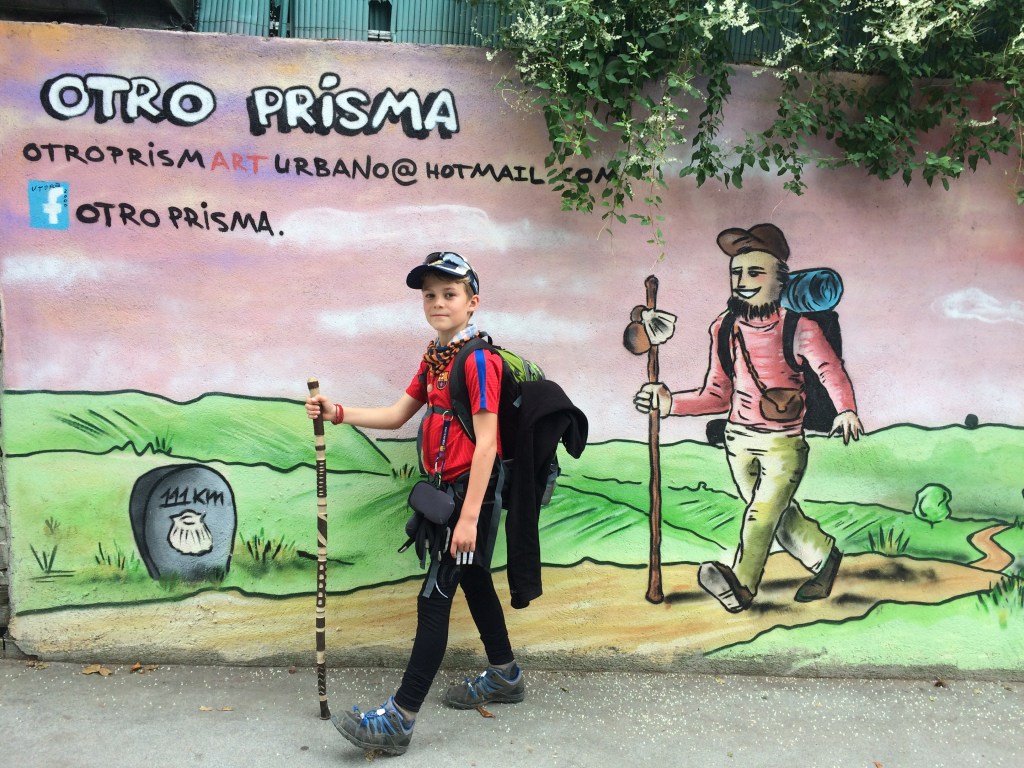
The Walking Stick is a symbol of those people in one’s life who assist in upliftment, encouragement and forward momentum. Having an emotional, physical and spiritual staff to lean on can help traverse tricky terrain.
I don’t walk with poles or a walking stick—in fact the few times I have used someone’s for a difficult crossing or steep downhill, I have fallen. This indicates to me that I need to become more familiar with asking for support. My innate tendency is to always be self supporting and to hold others up. This can be to my detriment if I can’t equally find the people and resources to support me in supporting others.
A Walking Stick can be seen in the negative light of a crutch and using one can be seen to highlight one’s disabilities. It is, therefore, imperative to give this an archetypal symbology that encourages its use. The sense of outreach in difficult times is so key to reducing suffering and restoring well-being.
This current campaign to walk 1,000km to raise awareness for mental health and suicide prevention made me extremely vulnerable in the asking for support and extremely disappointed. My lessons around support are to lean in only when the support is actually there and being mindful of expectations of it, without using the lack of people believing in me to snap back into being 100% self supporting again.
When you carve a walking stick that ultimately provides support for your pilgrimage, it is like an analogy that can translate into the care and love offered to and infused into another human being that ultimately become the food that fuels that individual to be the support you one day may reach out for.
The pilgrim’s Walking Stick is a symbol that young, able-bodied people also make use of this often necessary tool for of support and that there is no stigma attached to utilising it, whether walking 5 or 45 legs of the Pilgrim’s Way. Using a Walking Stick can be a practice of mindfulness and gratitude—a way to honour the self and the body in recognition of its strength and also acceptance of its fallibility.
It holds the intention and reminder that there is always support at hand and it will challenge a different response when either needing to ask for or accept the offer of help from others. I can lean on something/someone temporarily and it’s ok to then lay it down, until needed again, without a) feeling obligated to be enslaved, and b) depending on it always being there.
Questions to ask yourself:
- What held me back—cognitively, emotionally, somatically—in asking and/or receiving a hand of support today?
- Who are the people in my community, tribe who are my walking sticks in life and how do I honour these people more by being receptive to their care?
You can follow, support and share my Walking for Mental Health fundraising campaign on BackaBuddy. All my socials can be found on LinkTree.
 WELL WORTH BEING